 tiqora
UI
Modern web UI
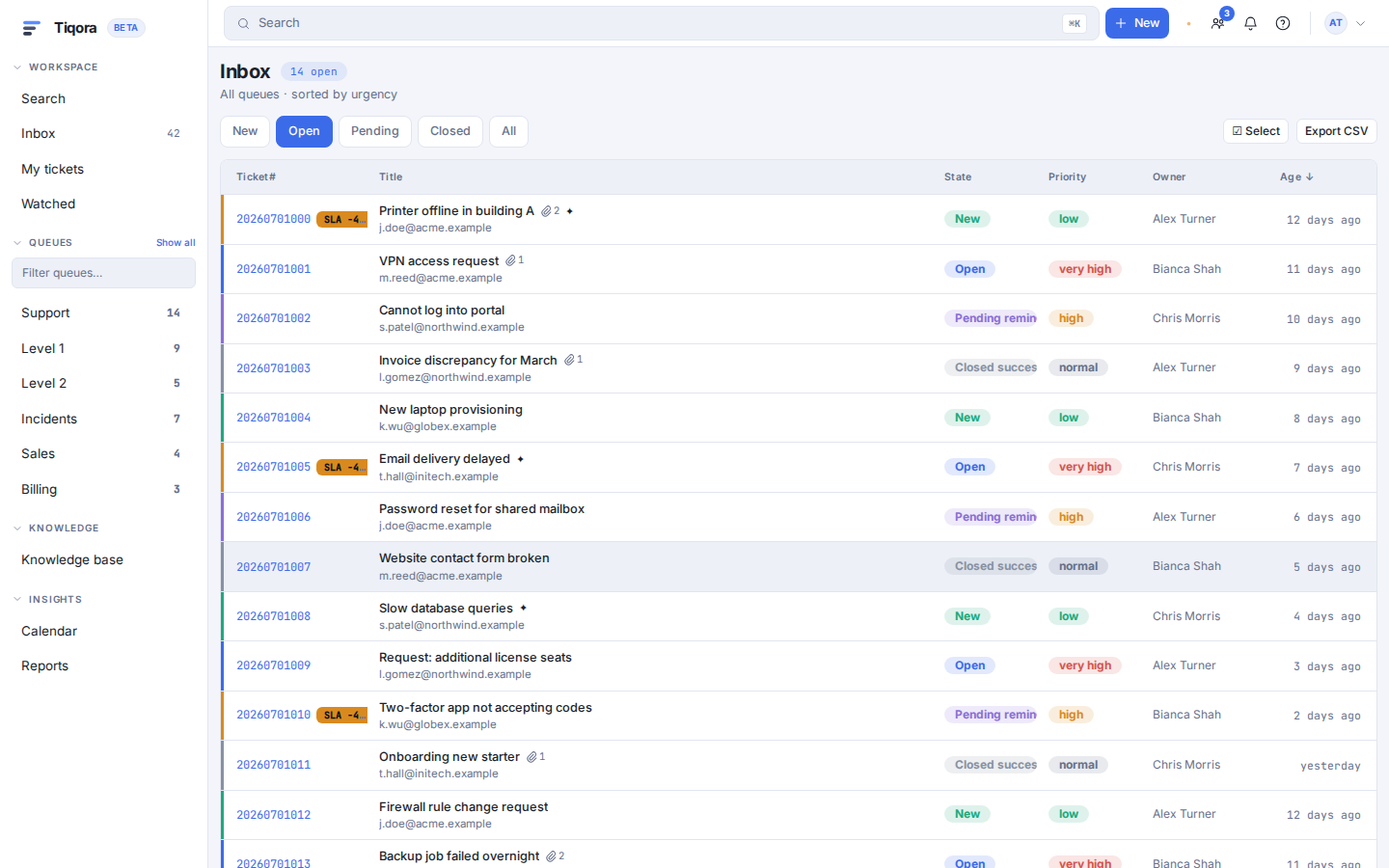
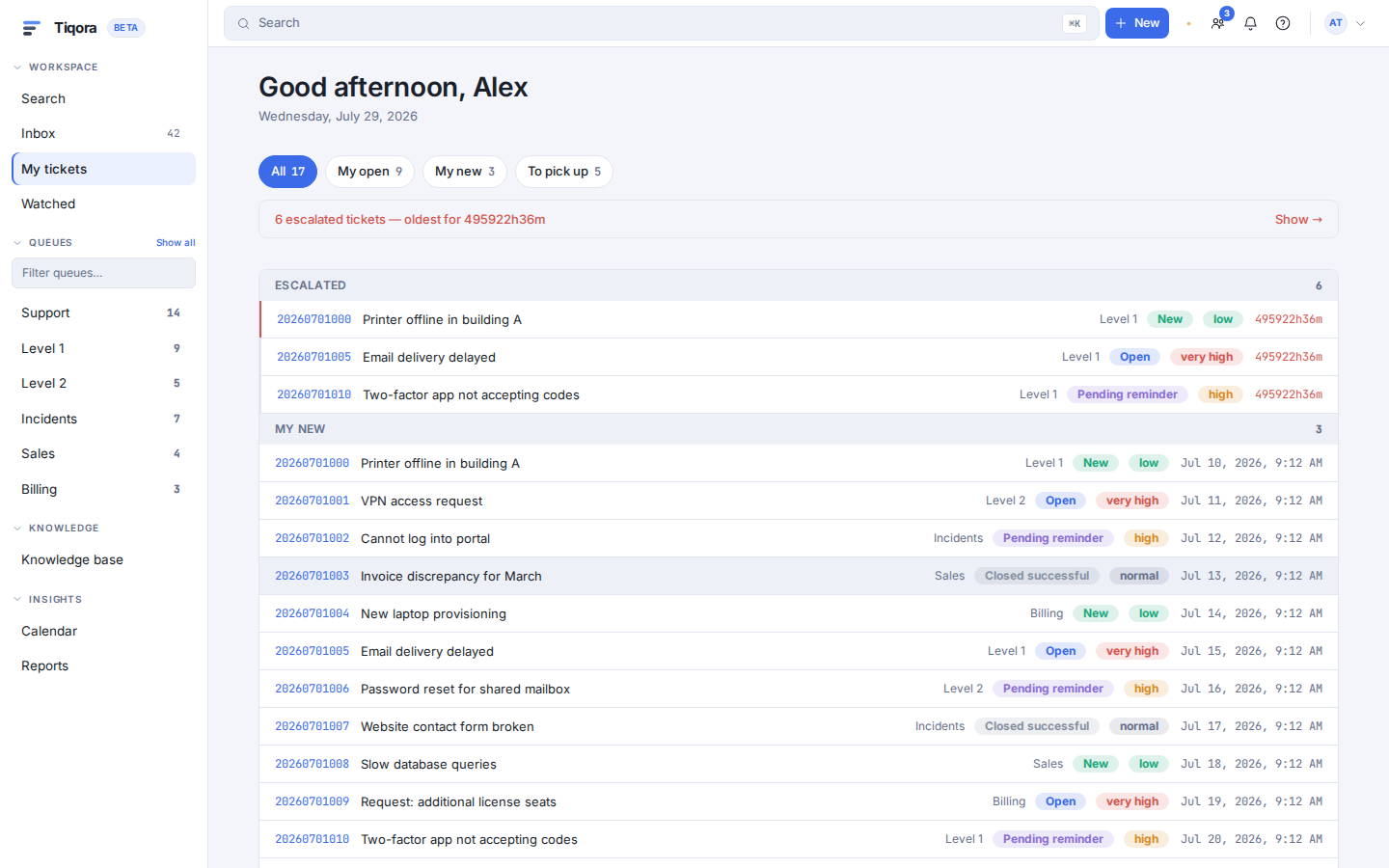
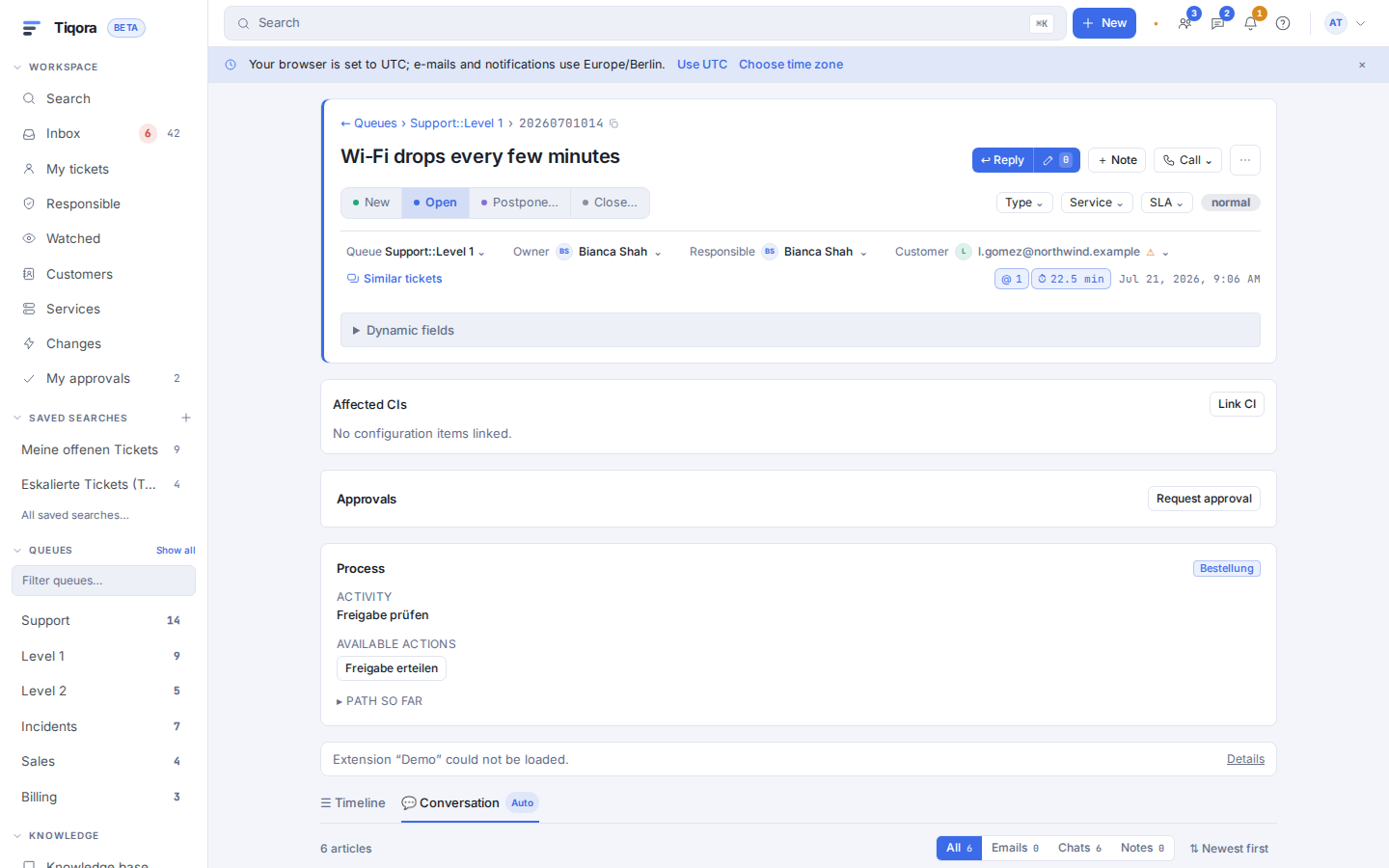
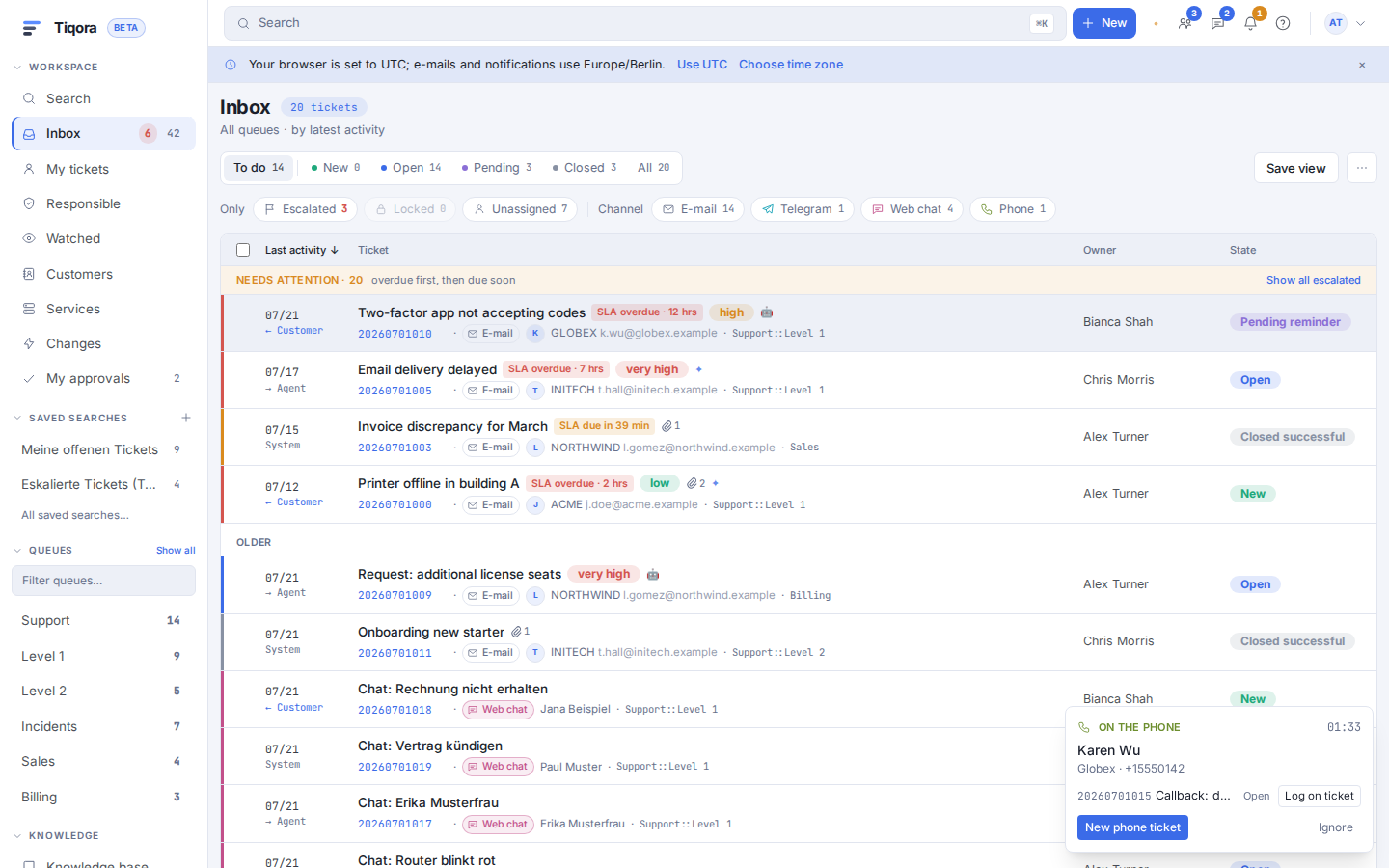
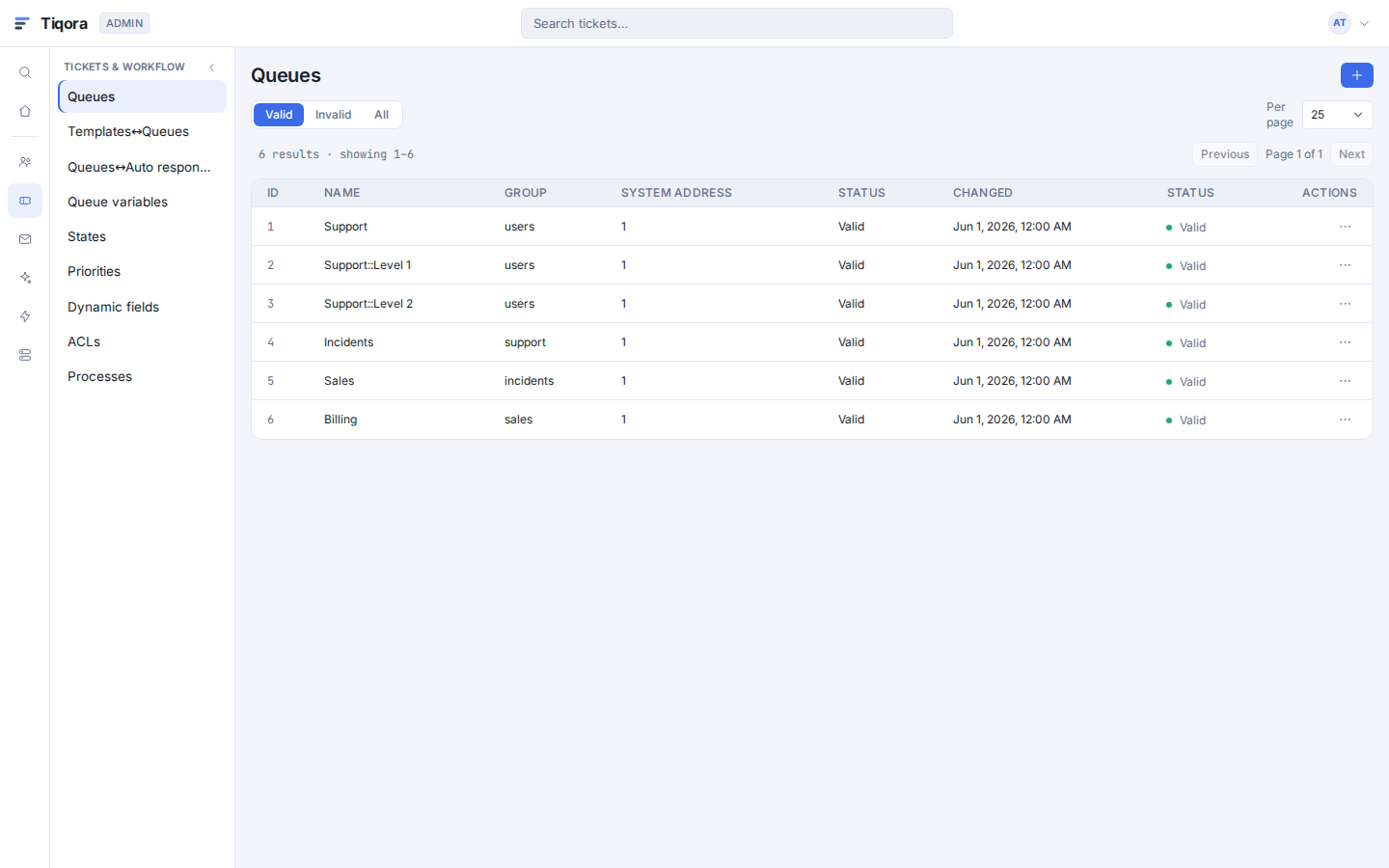
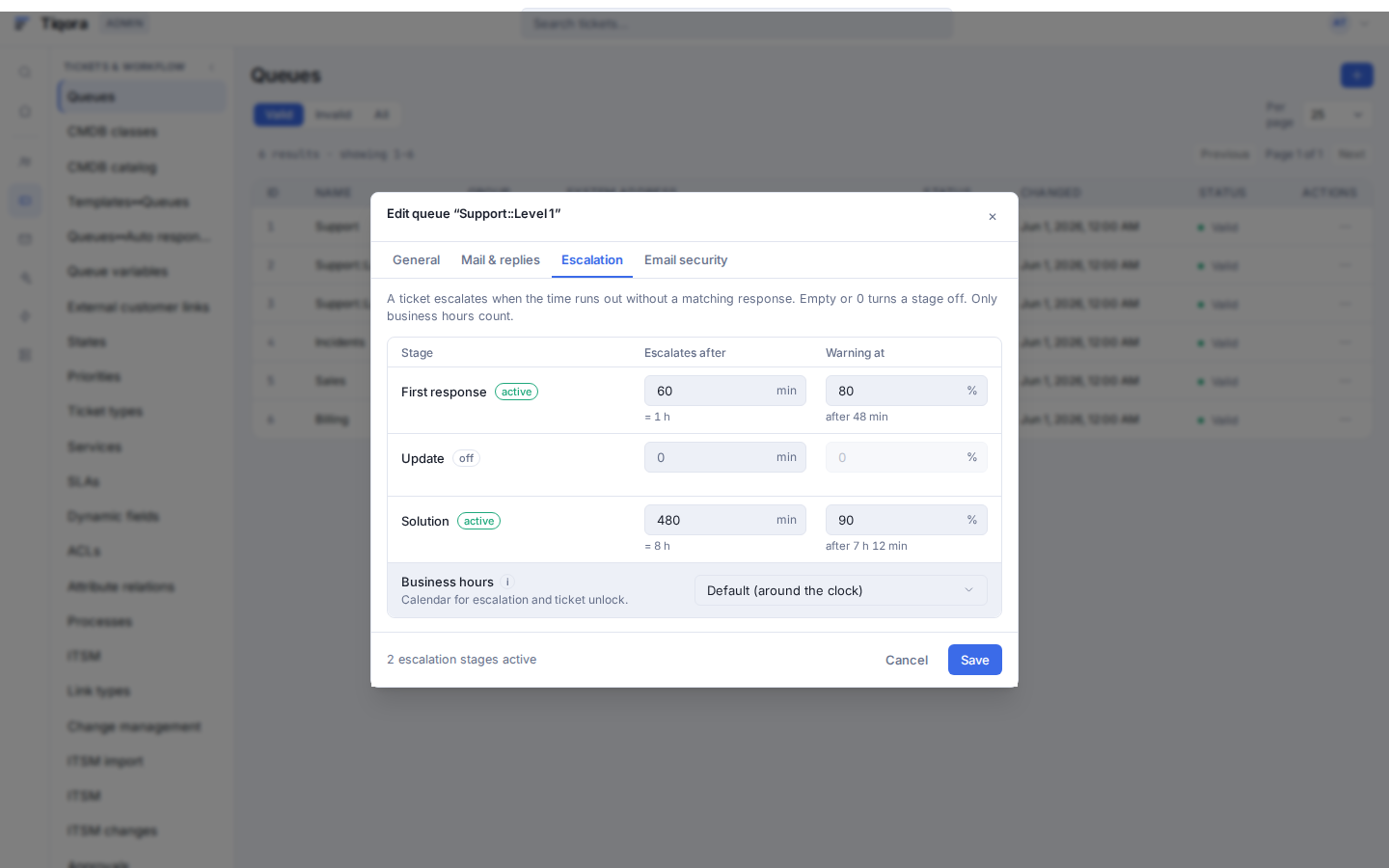
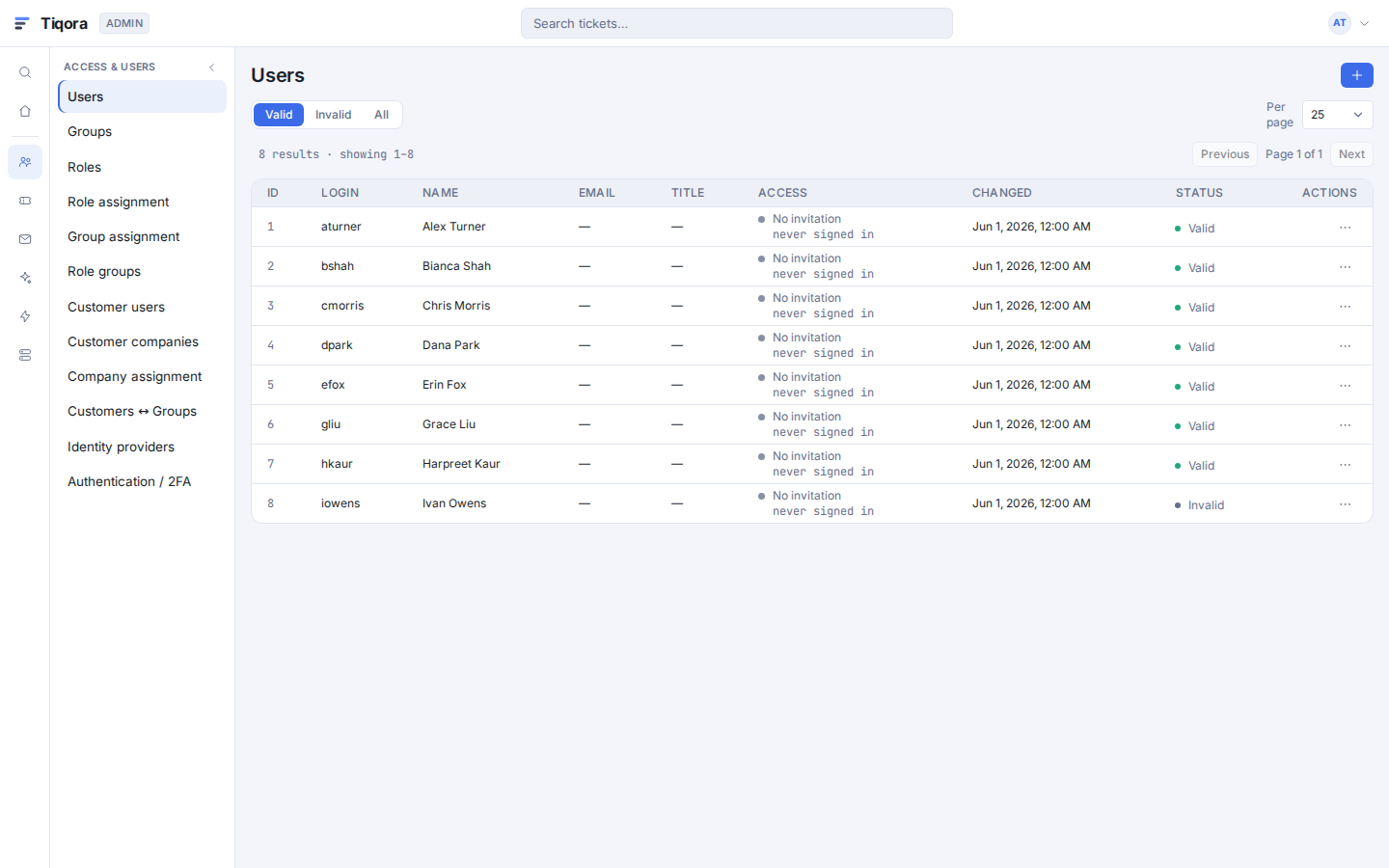
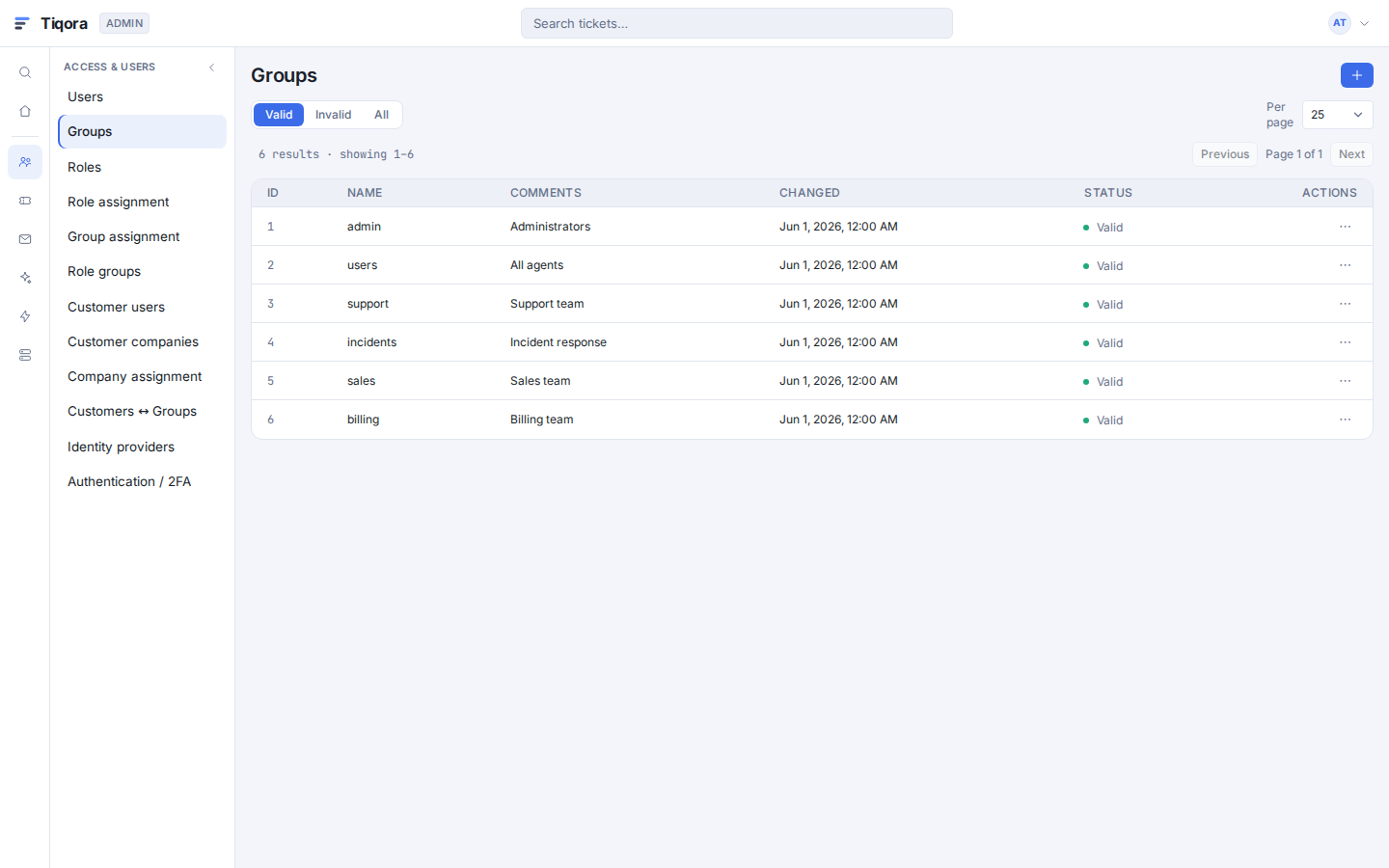
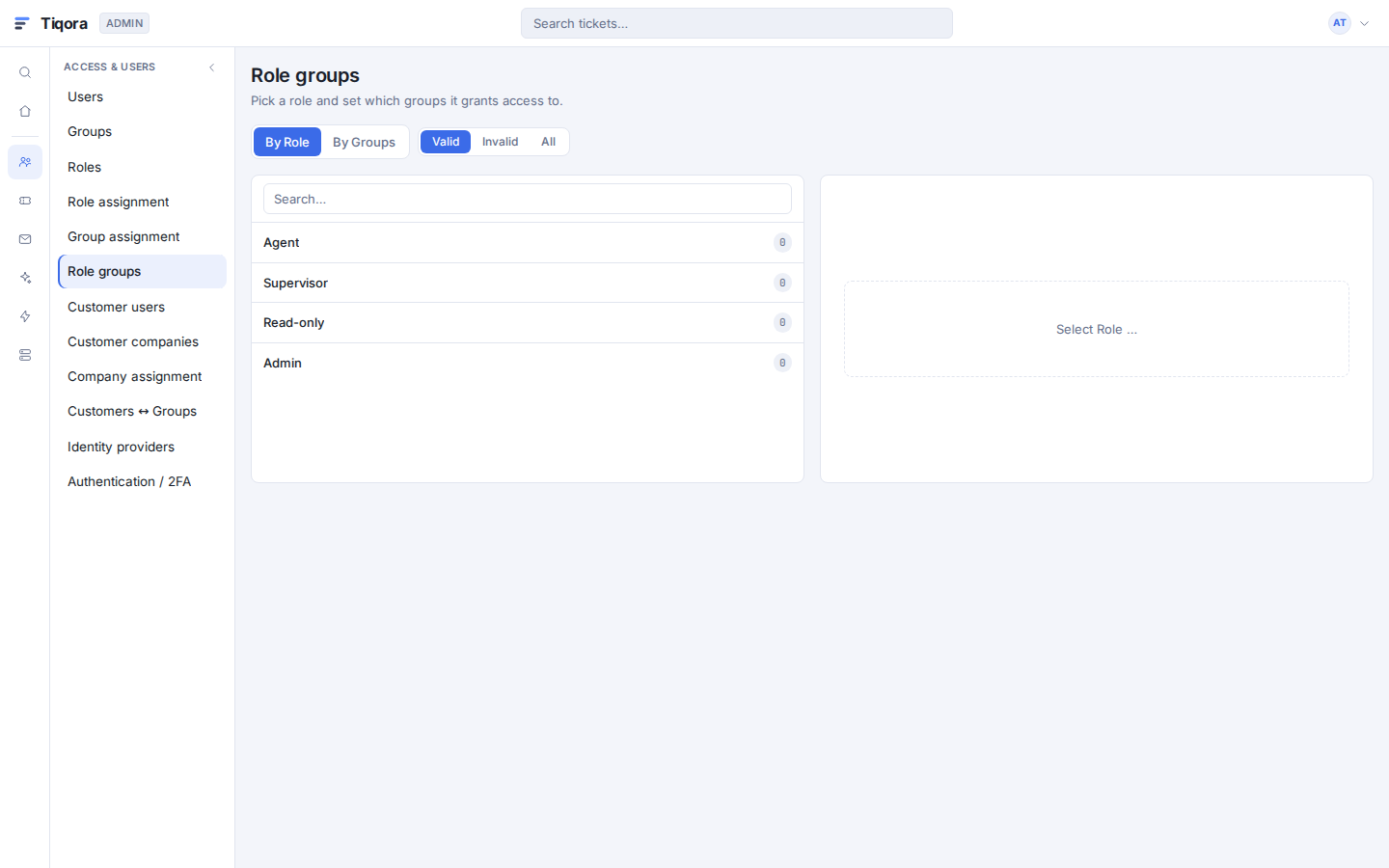
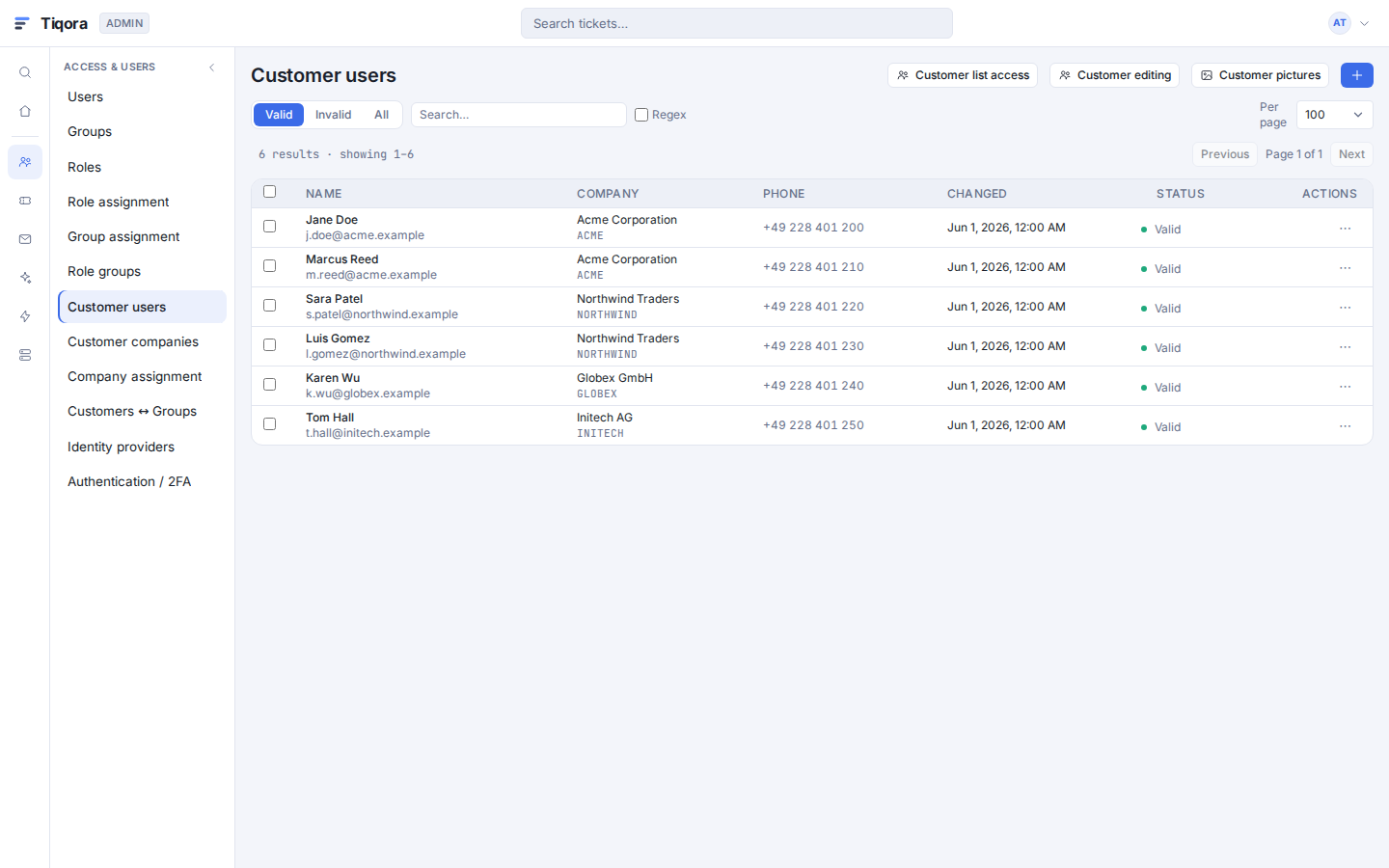
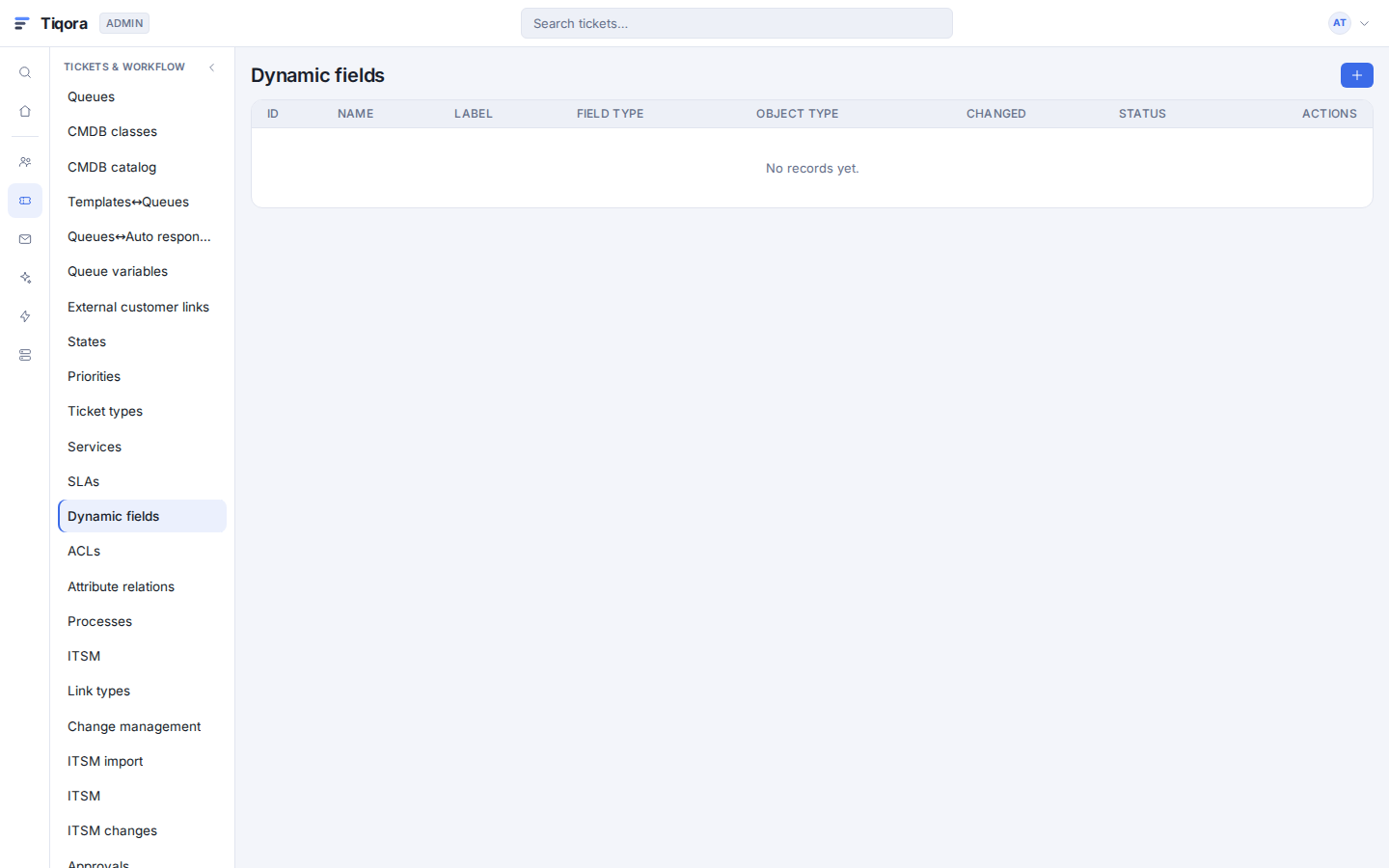
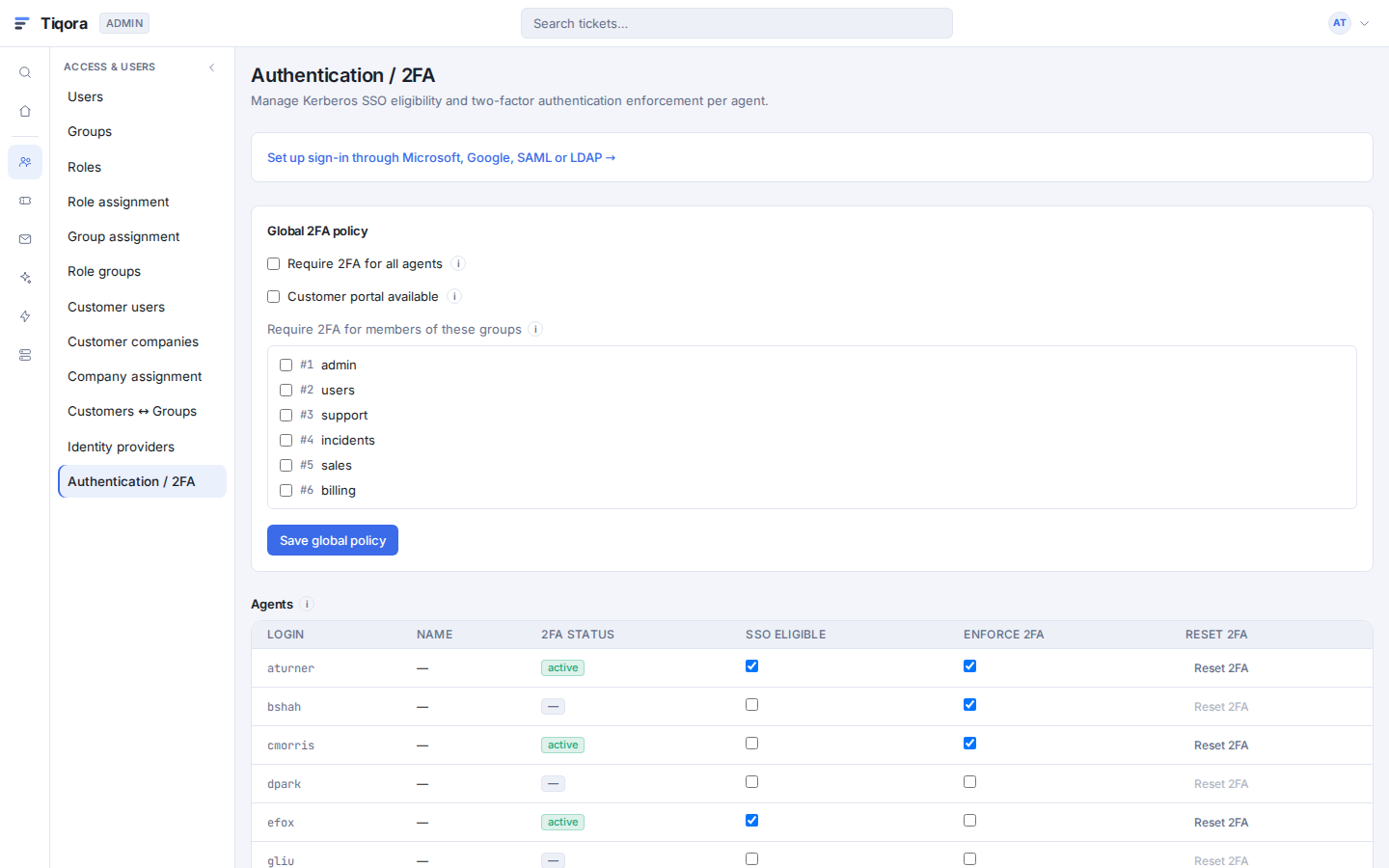
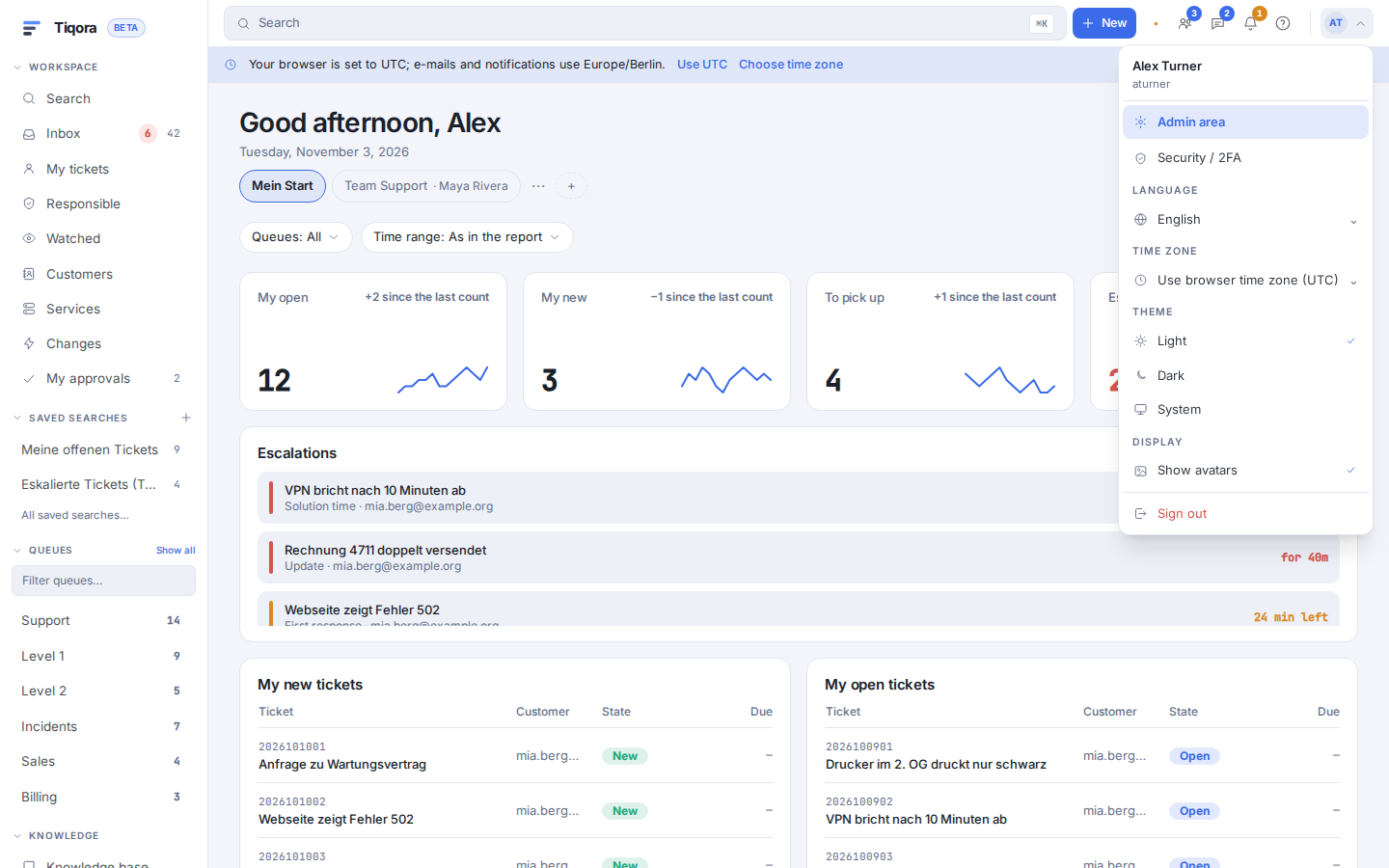
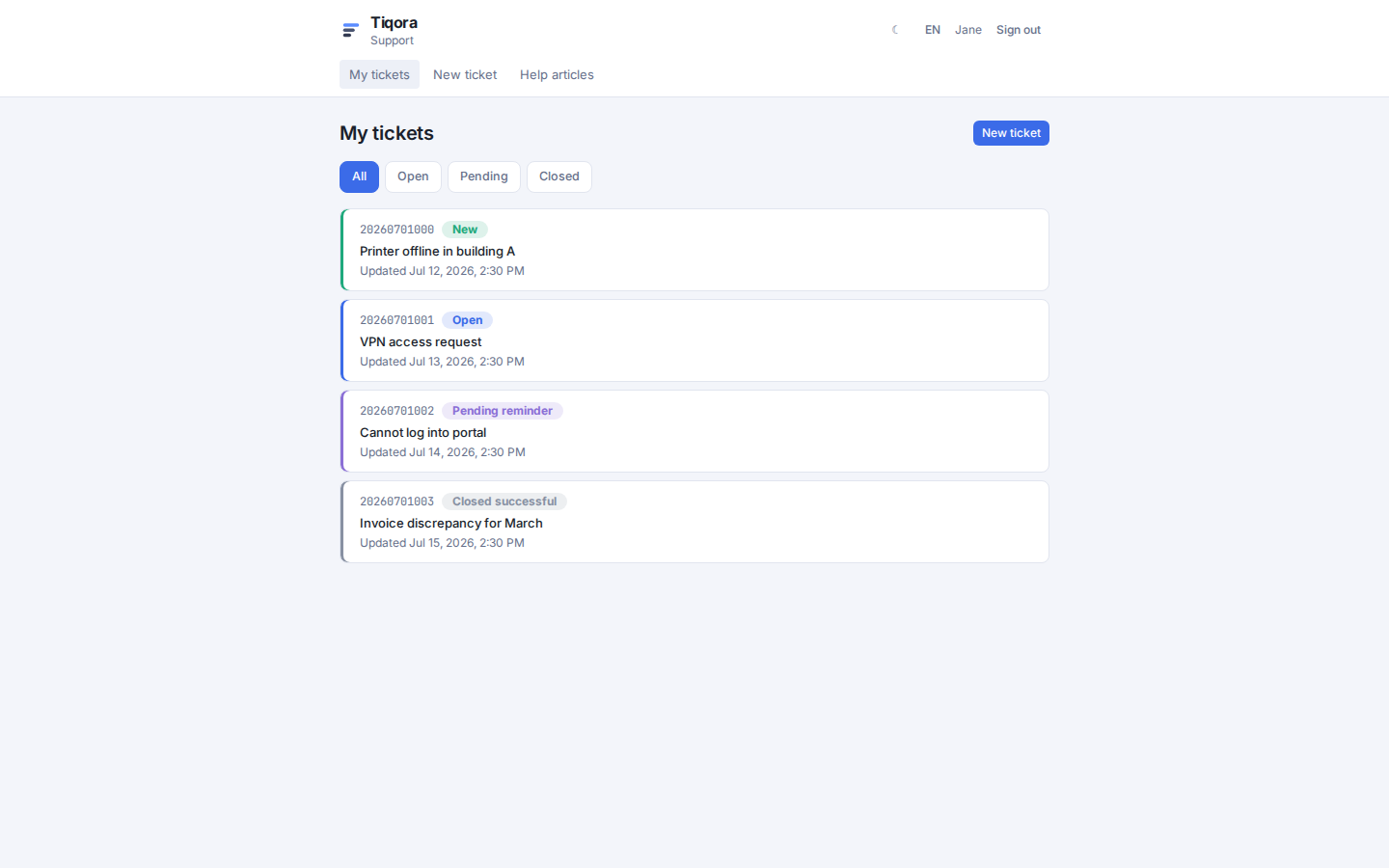
Agent workspace, admin console, and customer portal — a clear step up from classic OTRS/Znuny screens, in dark and light themes built for daily agent use.
Tiqora is a clean-room reimplementation of a ticket system that speaks the OTRS / Znuny 6.0–7.3 database — with a first-class web UI, AI-assisted replies & summaries, and a path to run alongside your existing instance.
Same familiar ticket data model when you need it — a modern stack and UI when you work in it every day.
Agent workspace, admin console, and customer portal — a clear step up from classic OTRS/Znuny screens, in dark and light themes built for daily agent use.
Runtime schema profile adapts to peers from OTRS 6.0 through Znuny 7.3 on MariaDB/MySQL and PostgreSQL. Parallel operation on the same database is first-class. See matrix ↓
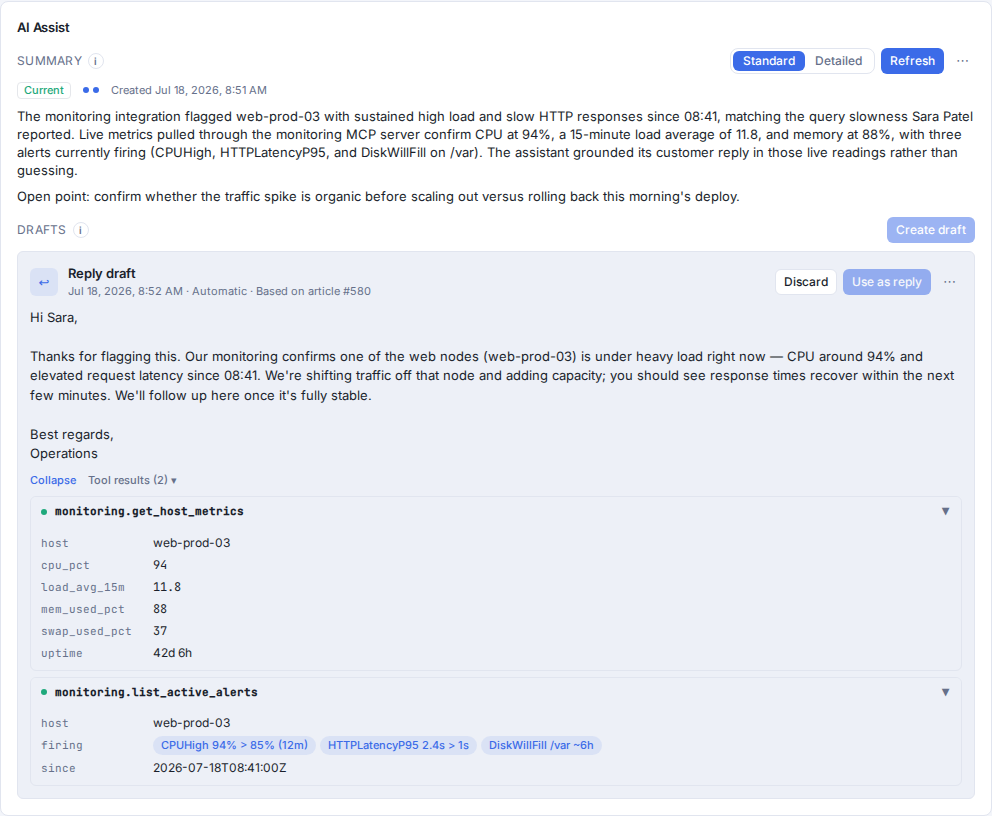
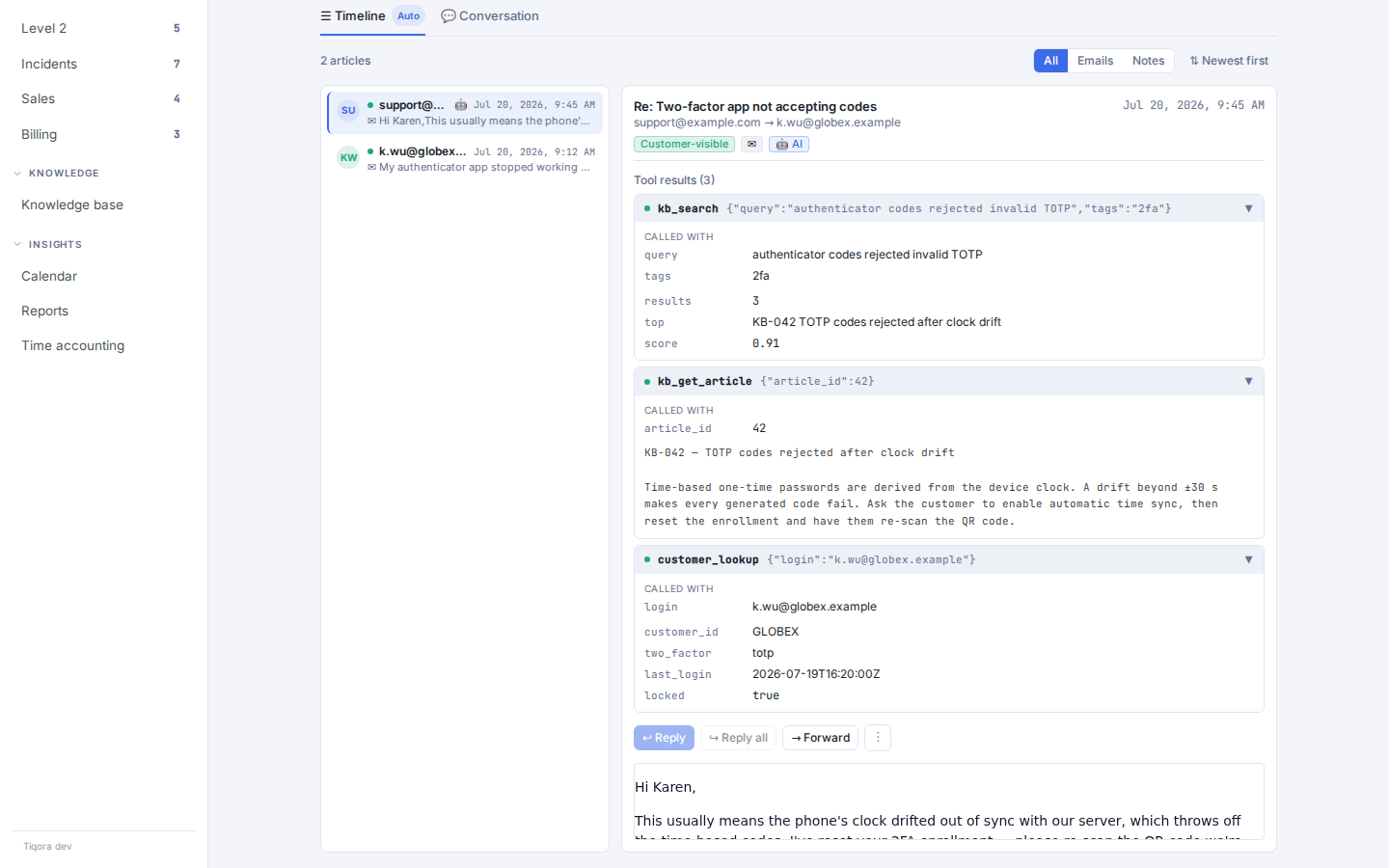
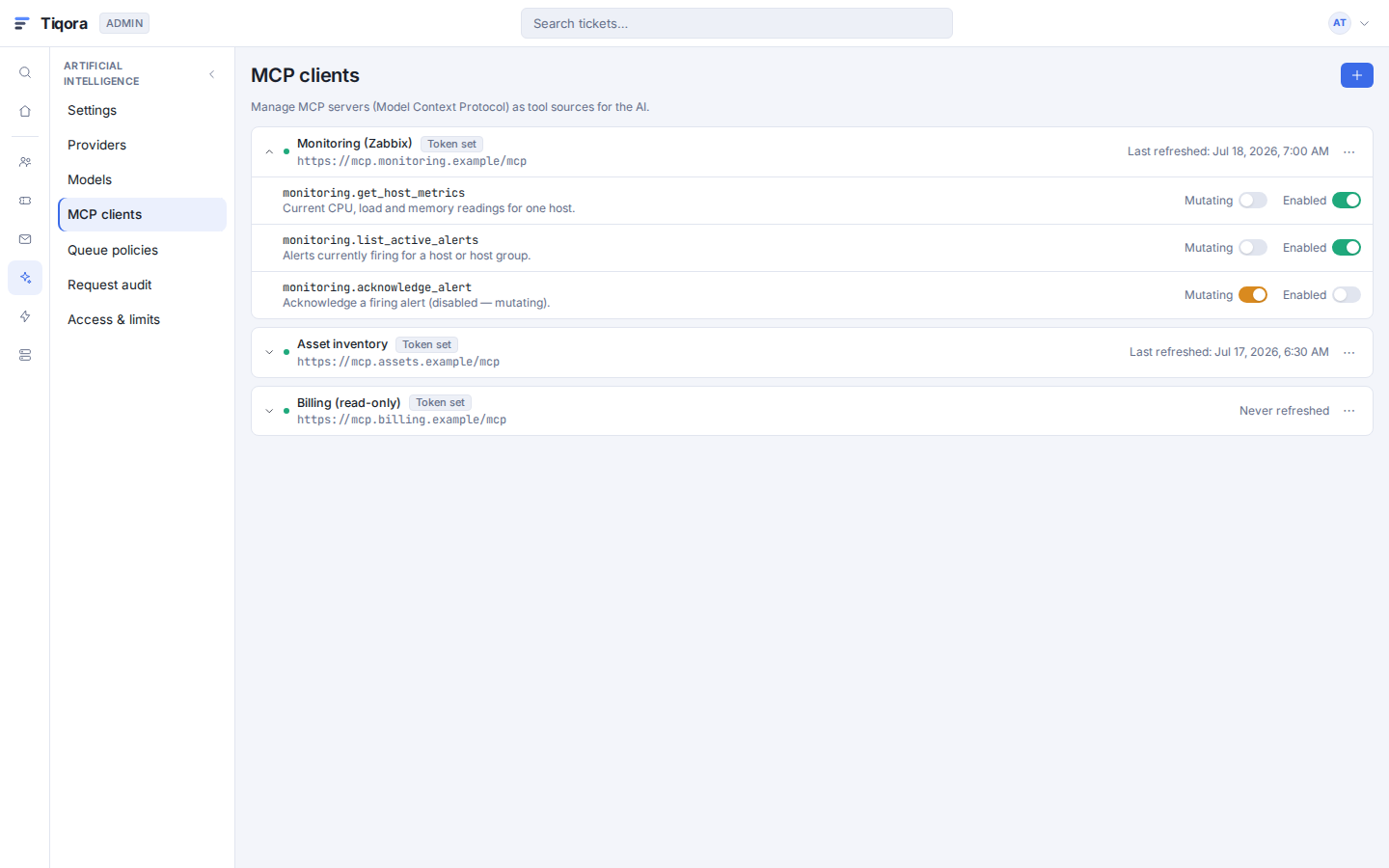
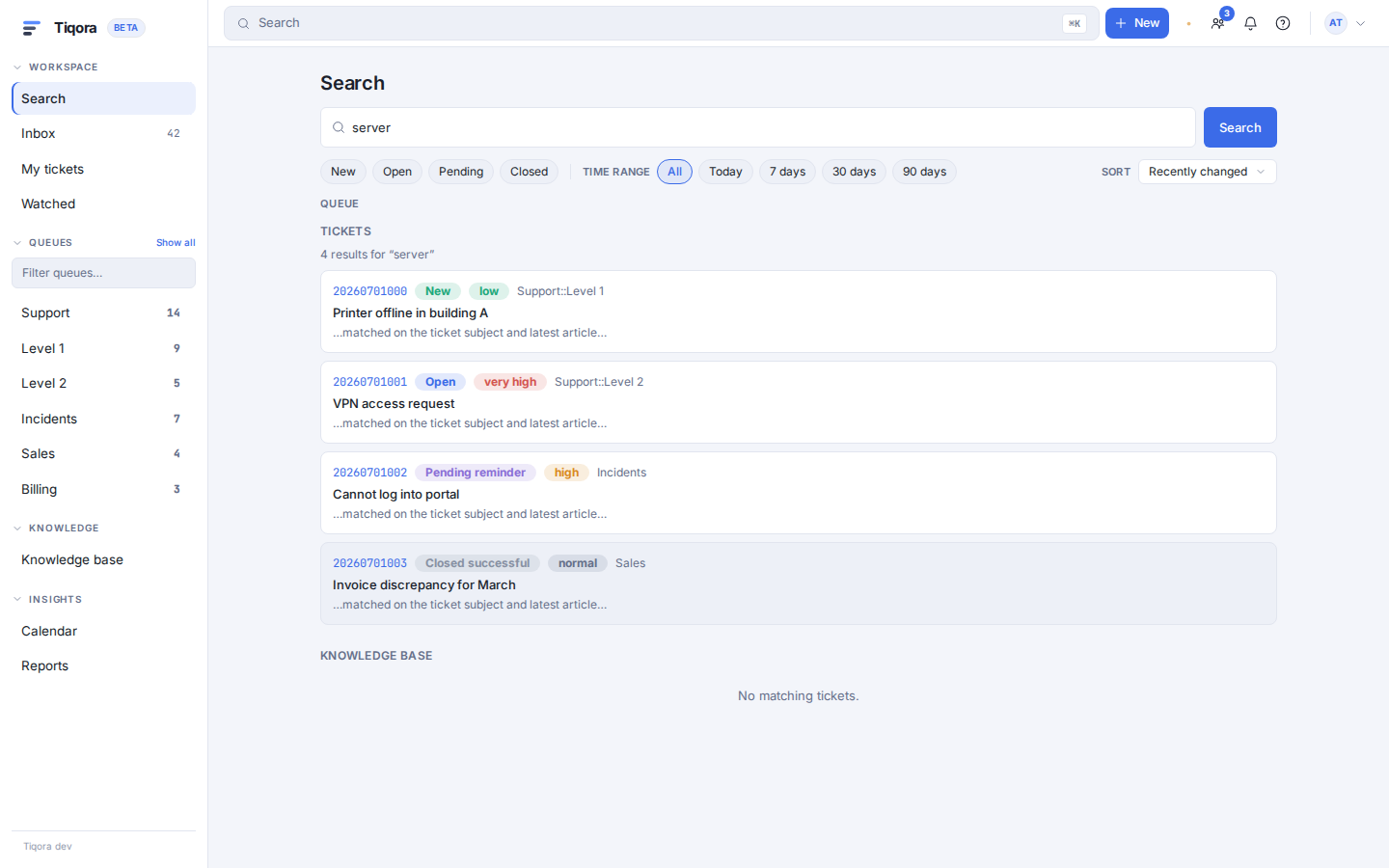
Fast ticket search via Meilisearch, plus an MCP server so AI agents use the same permission engine as humans.
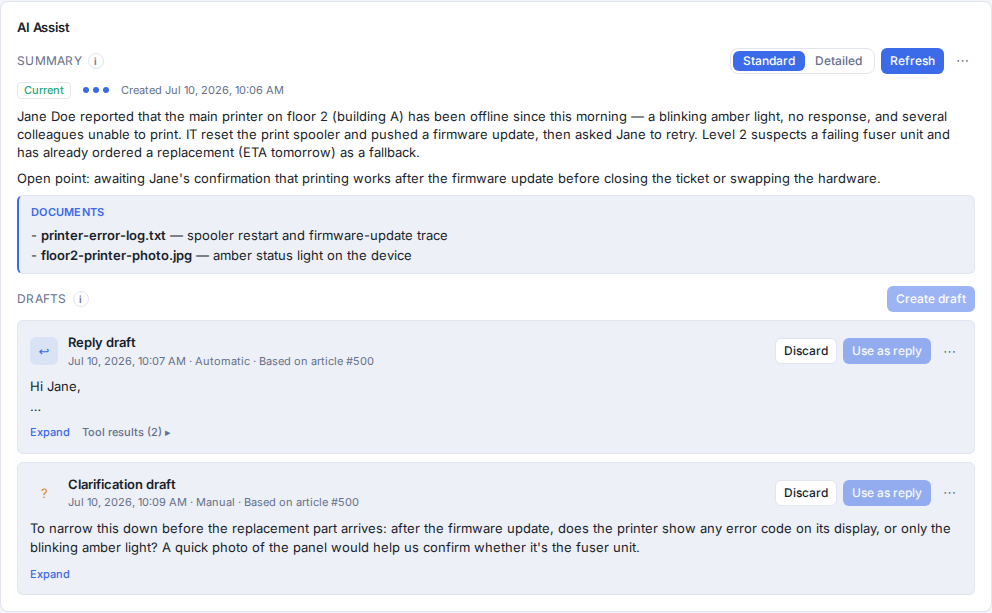
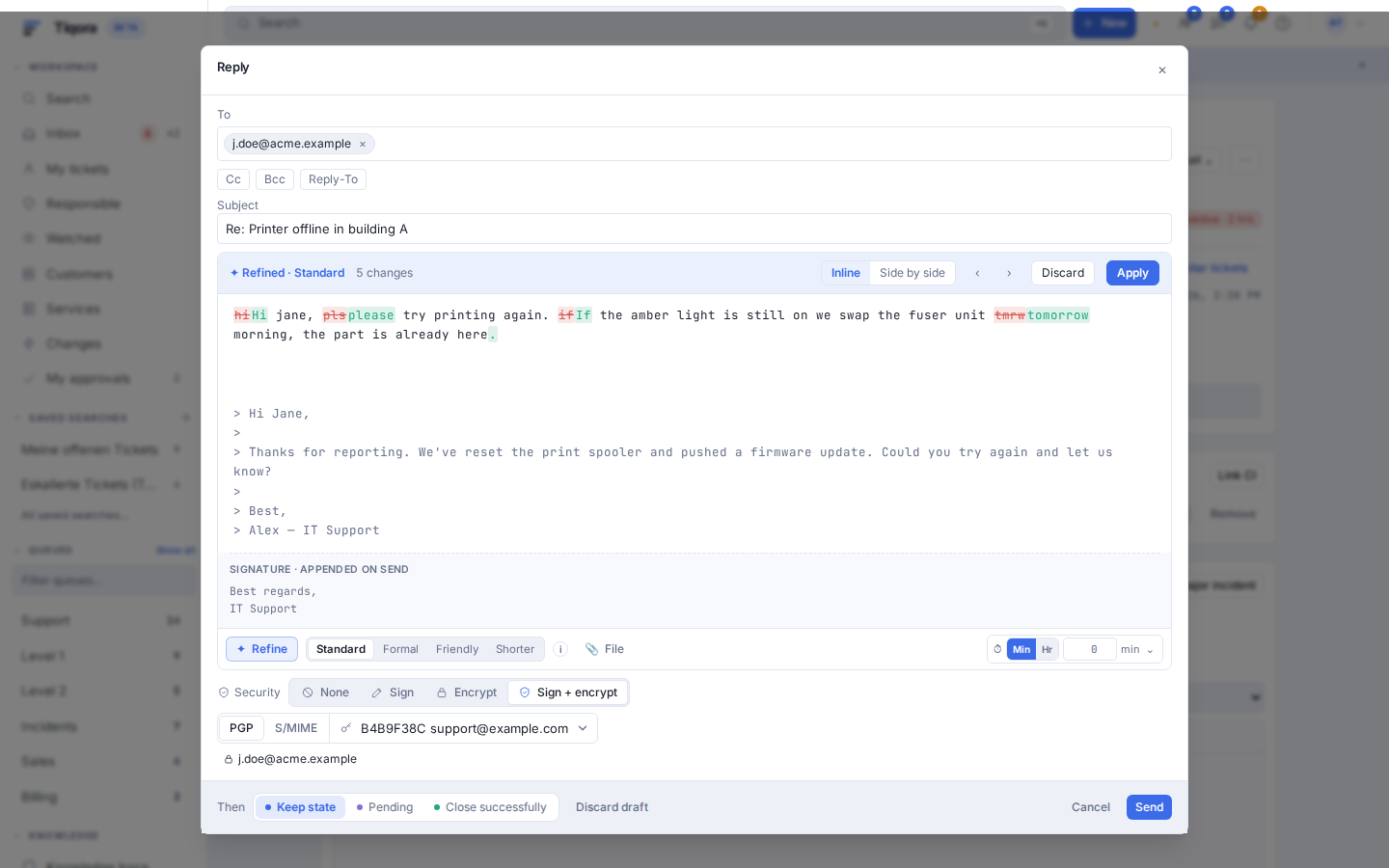
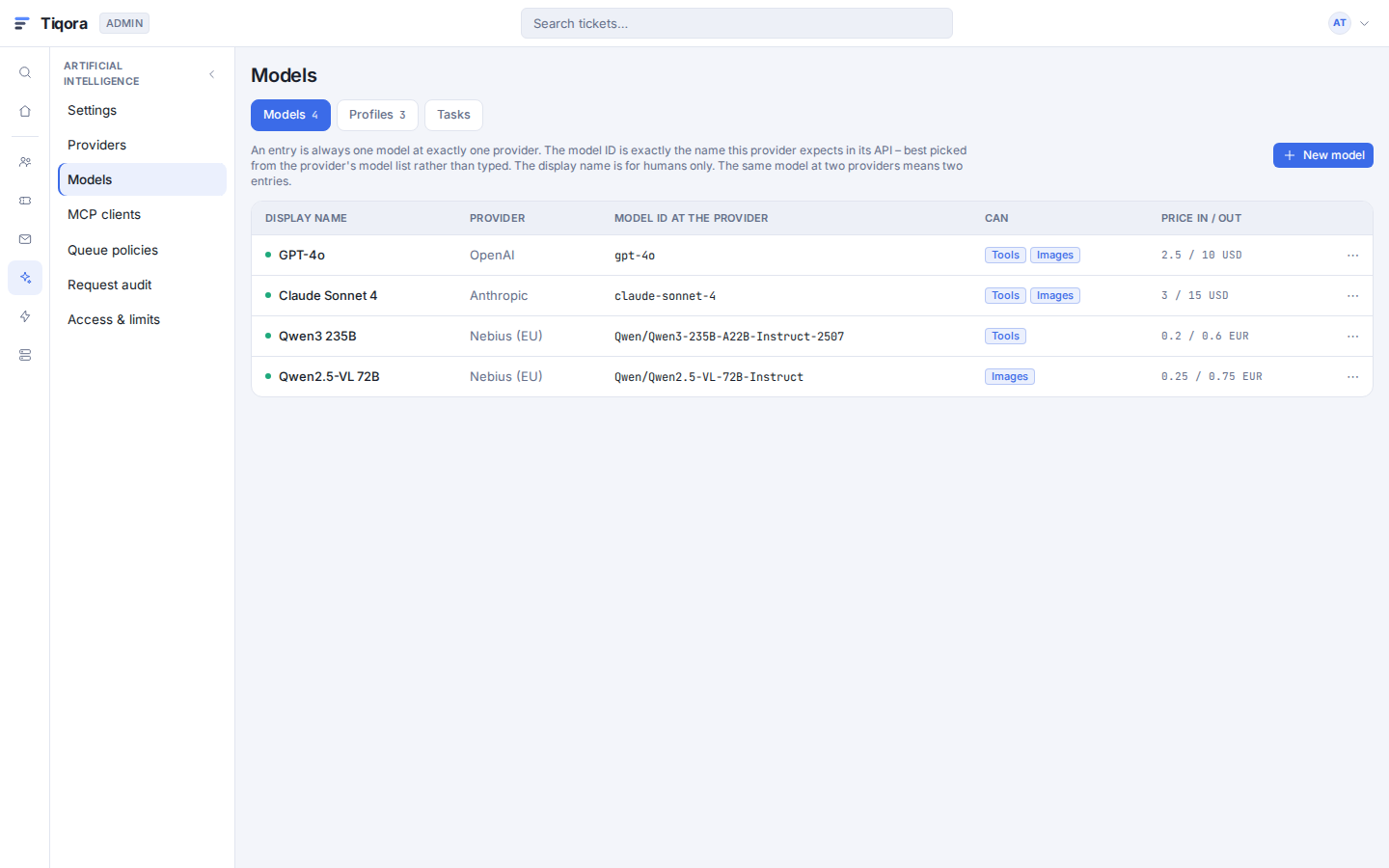
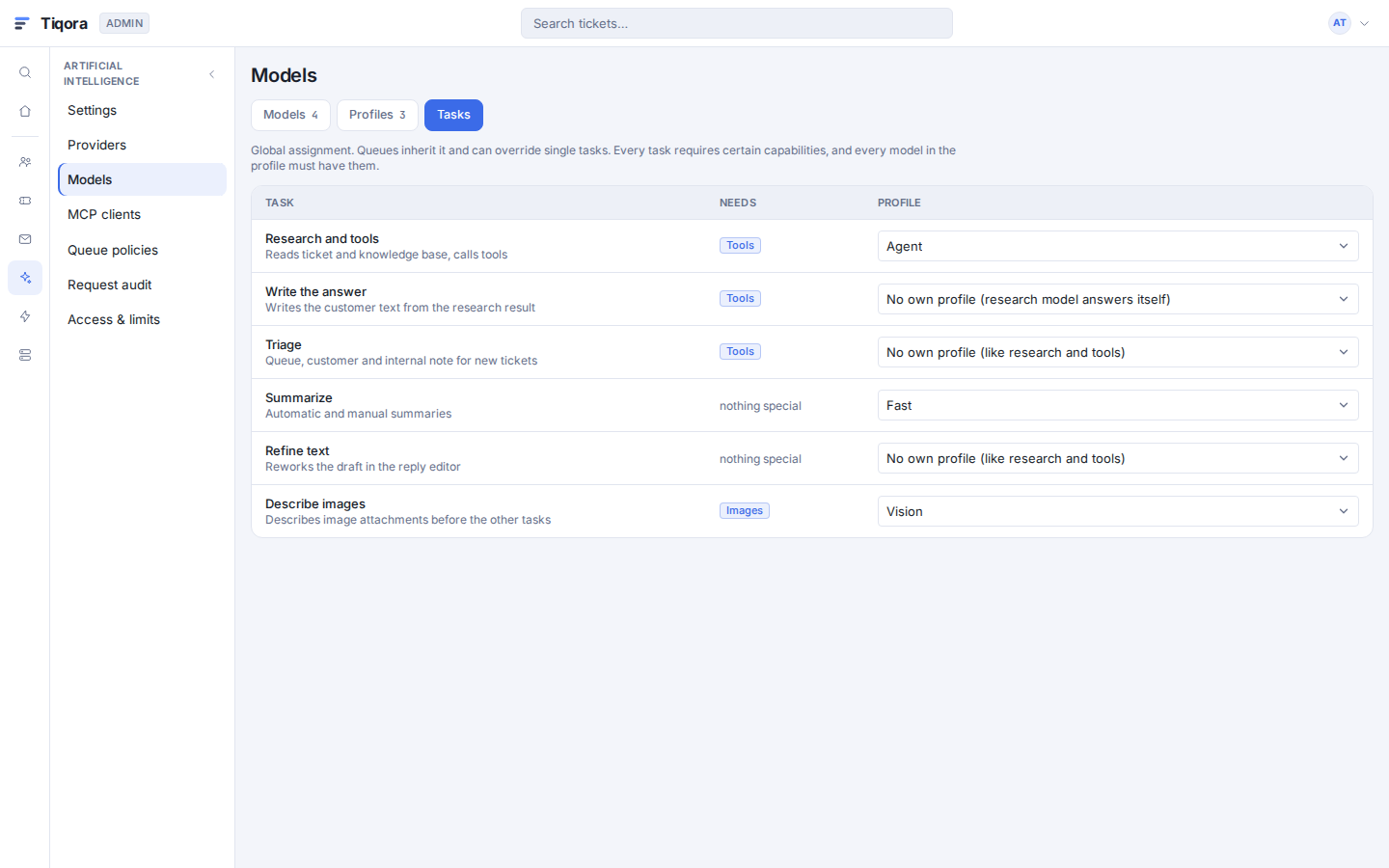
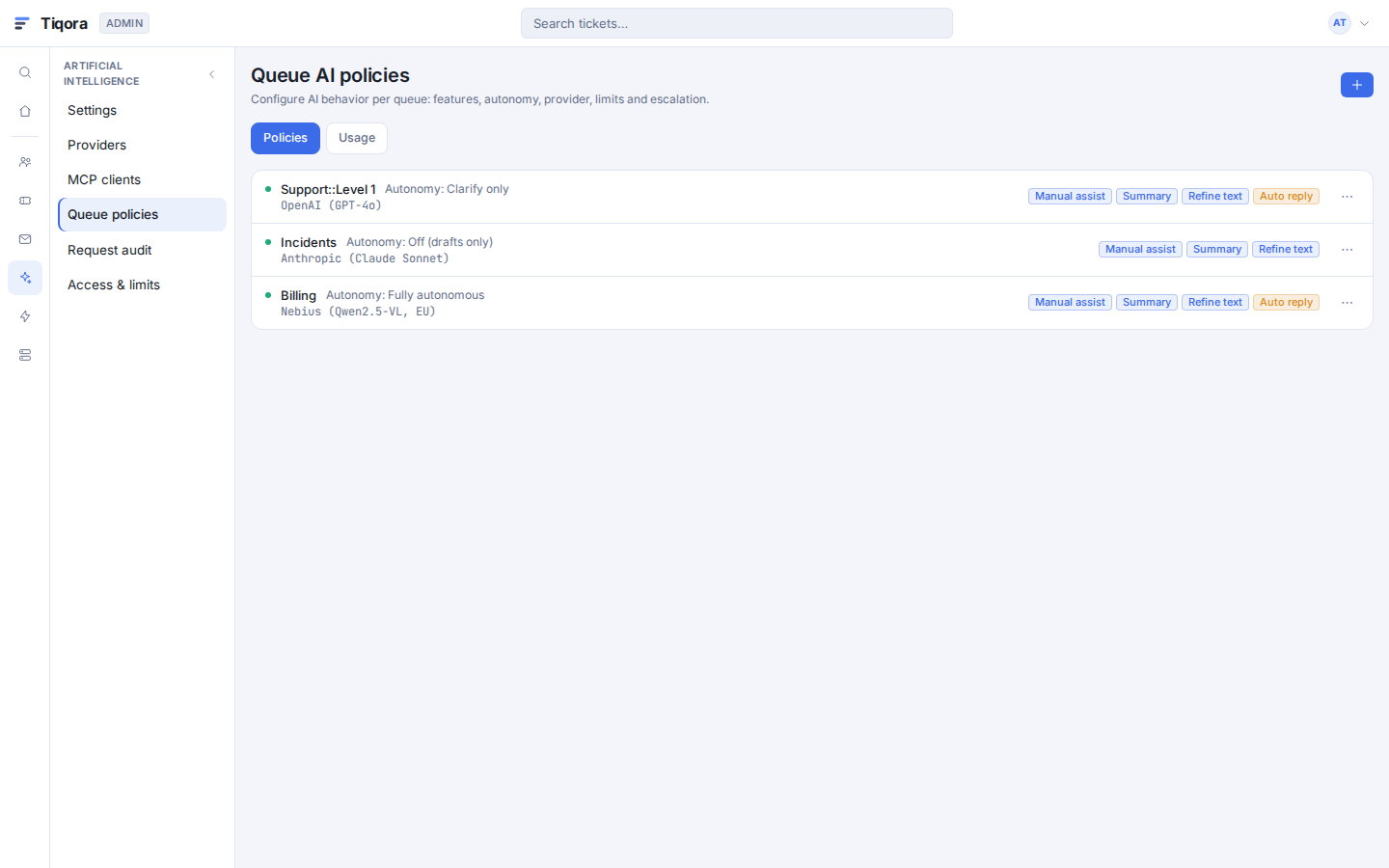
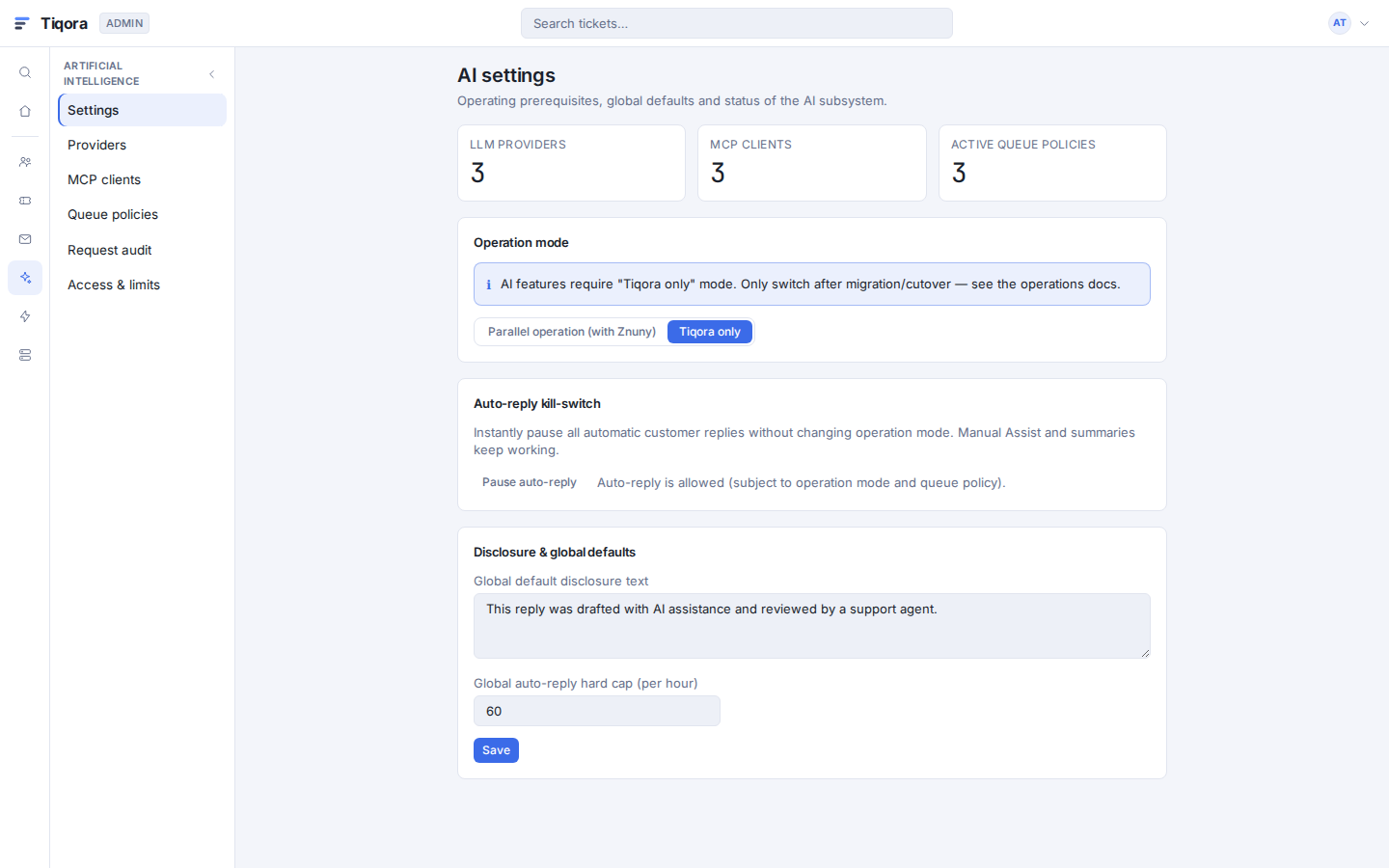
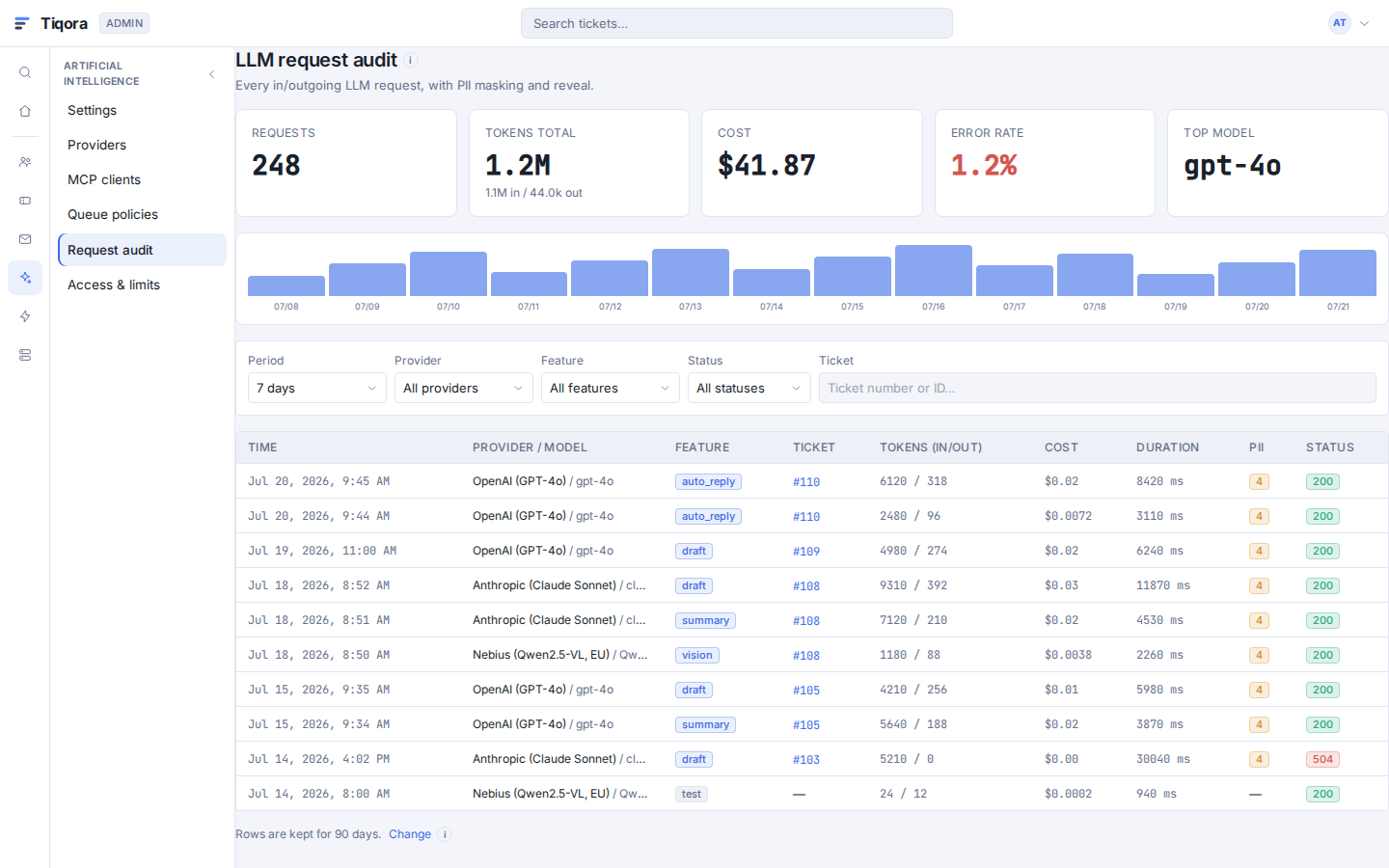
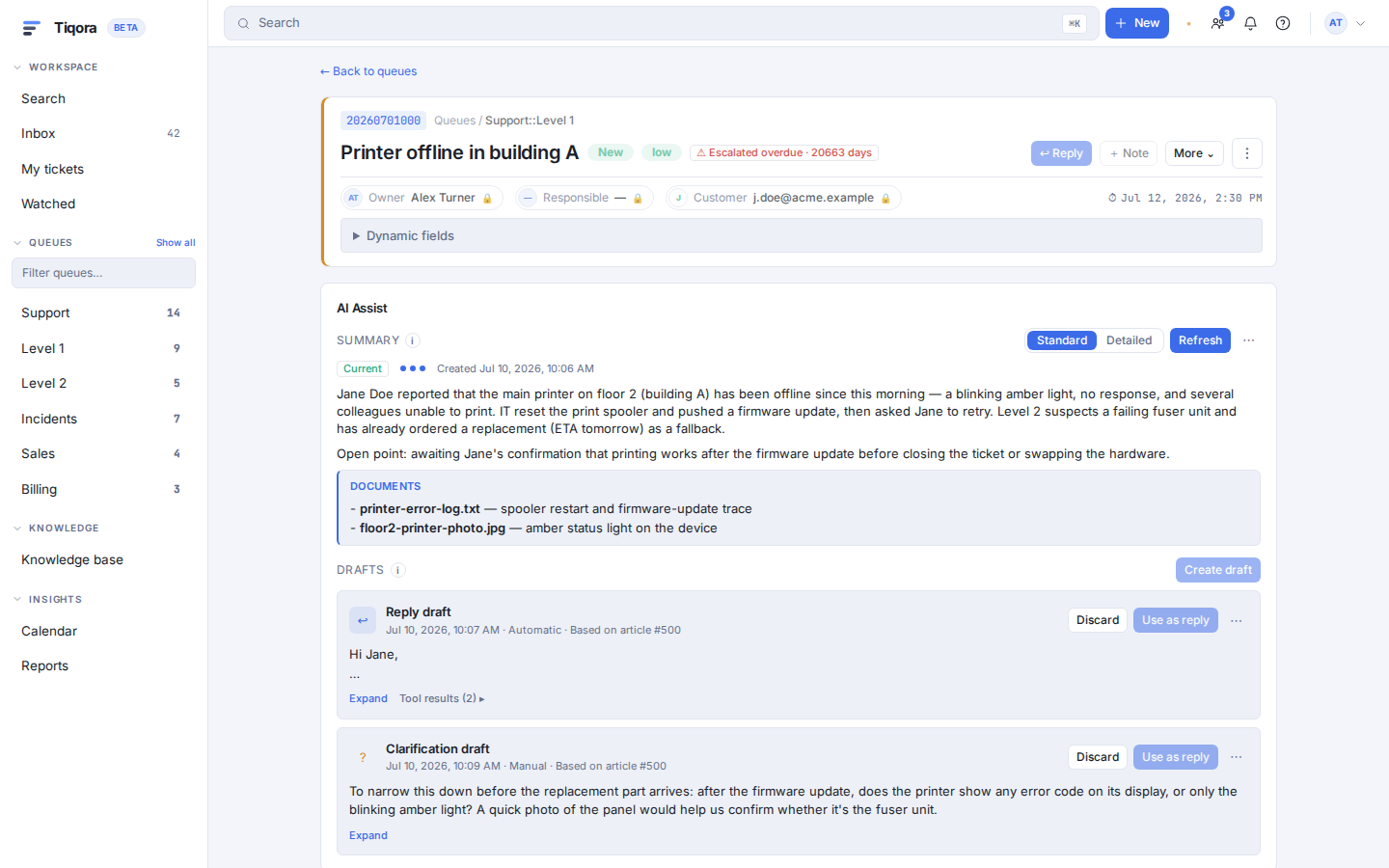
Per-queue policies drive draft replies, summaries, triage and optional autonomous auto-replies; agents refine their own text and review the changes as a diff, and can pause the AI per ticket. Each task routes to its own model profile, PII is masked before every LLM call, and the full audit log exports to a PII-aware PDF.
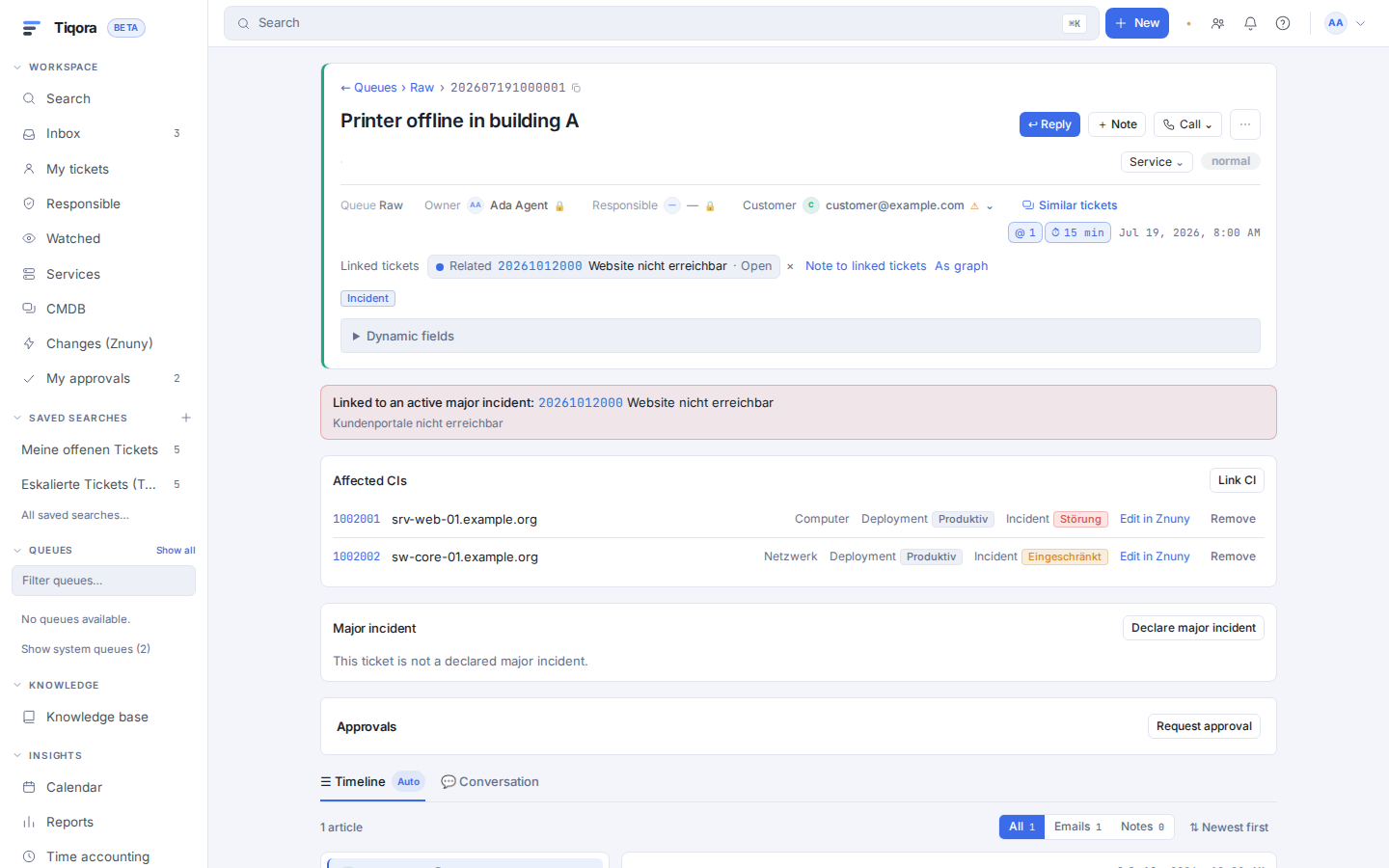
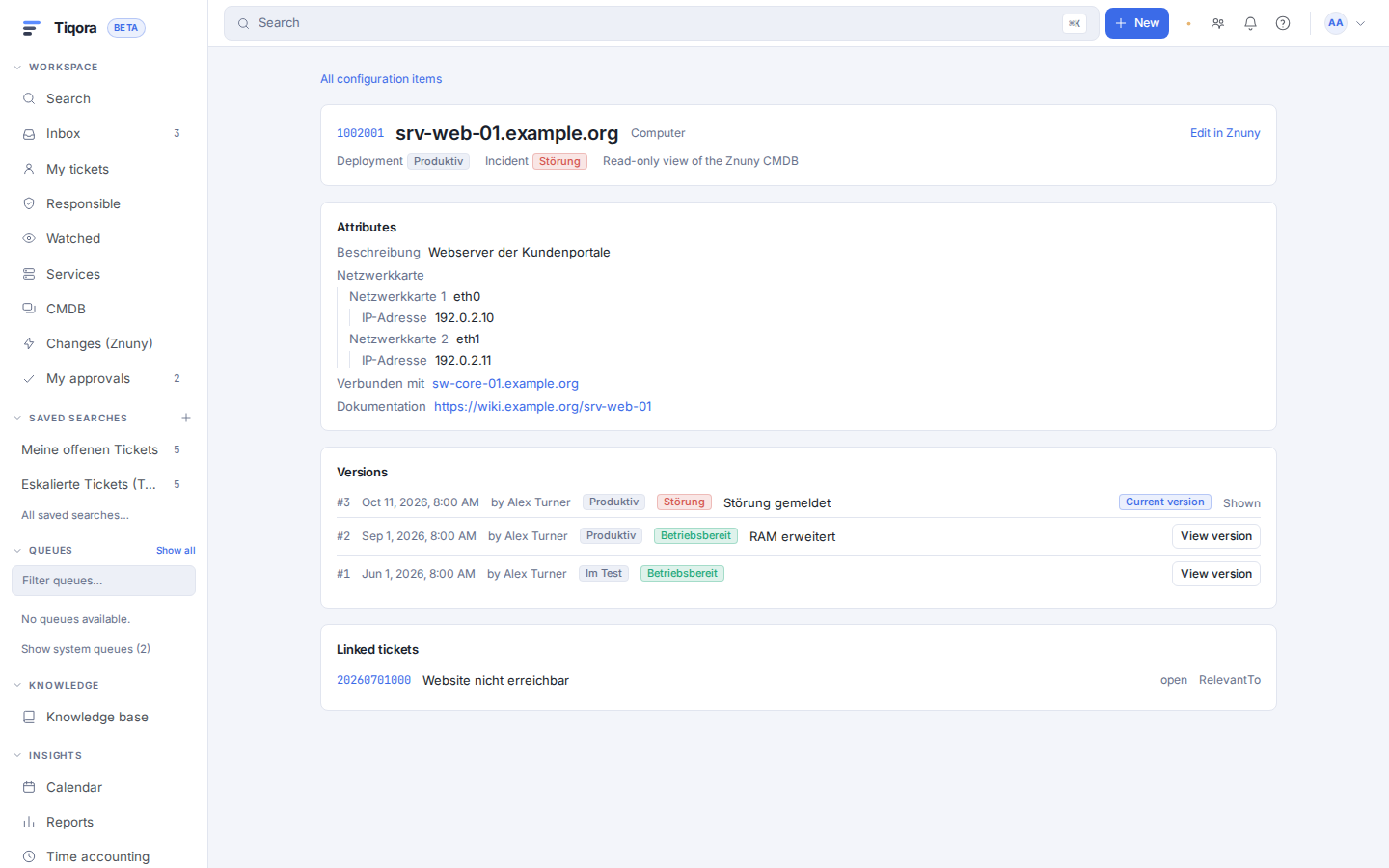
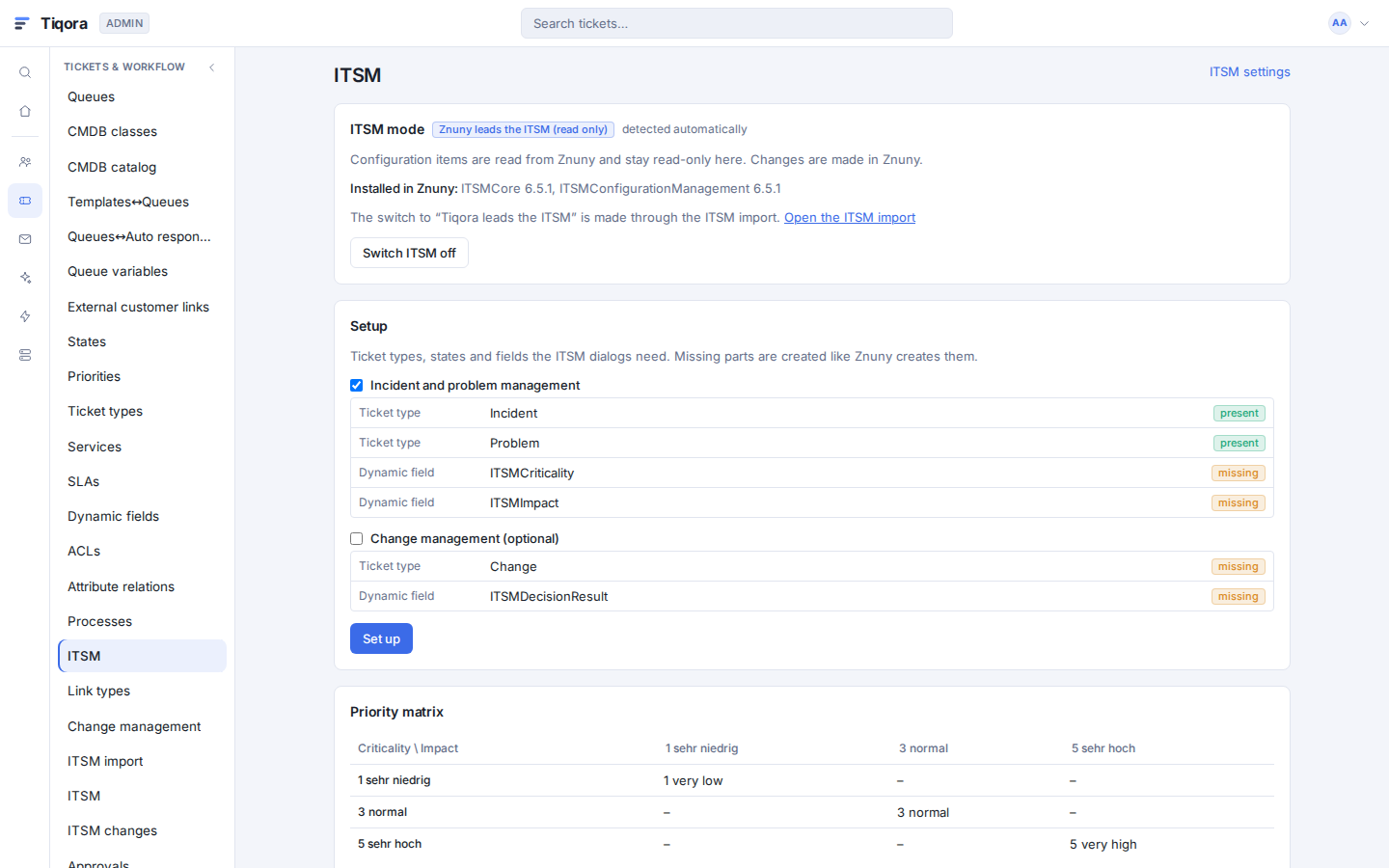
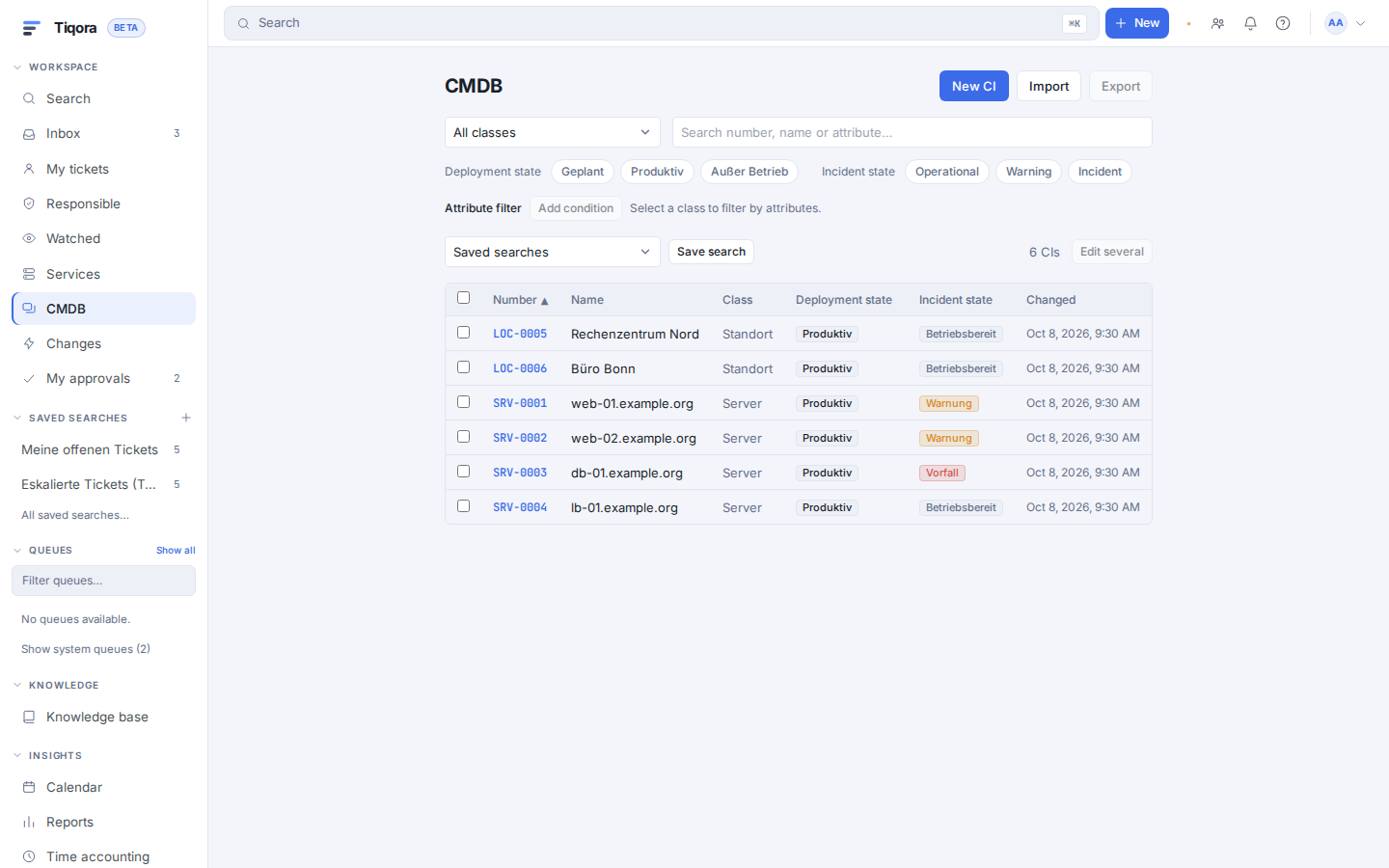
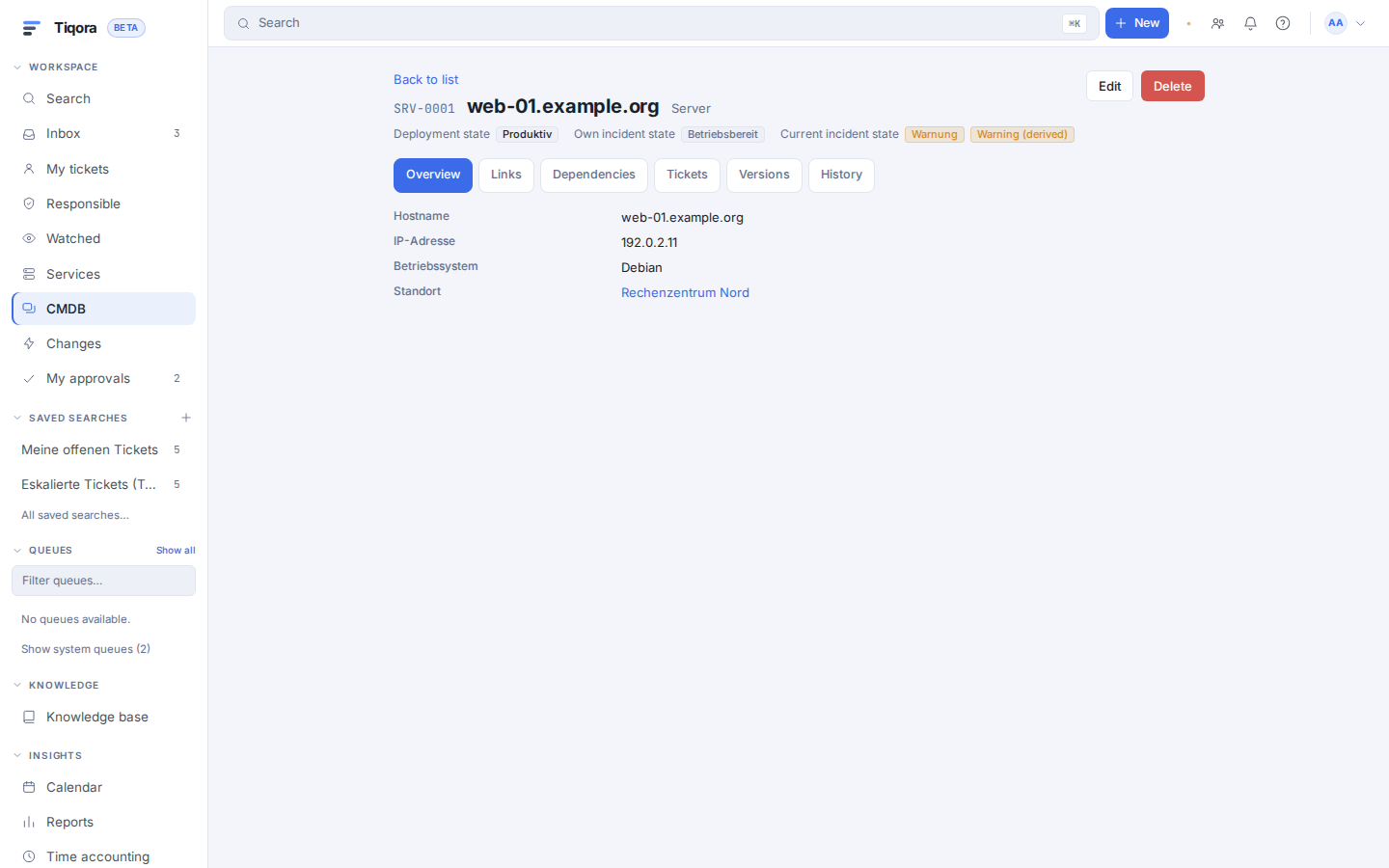
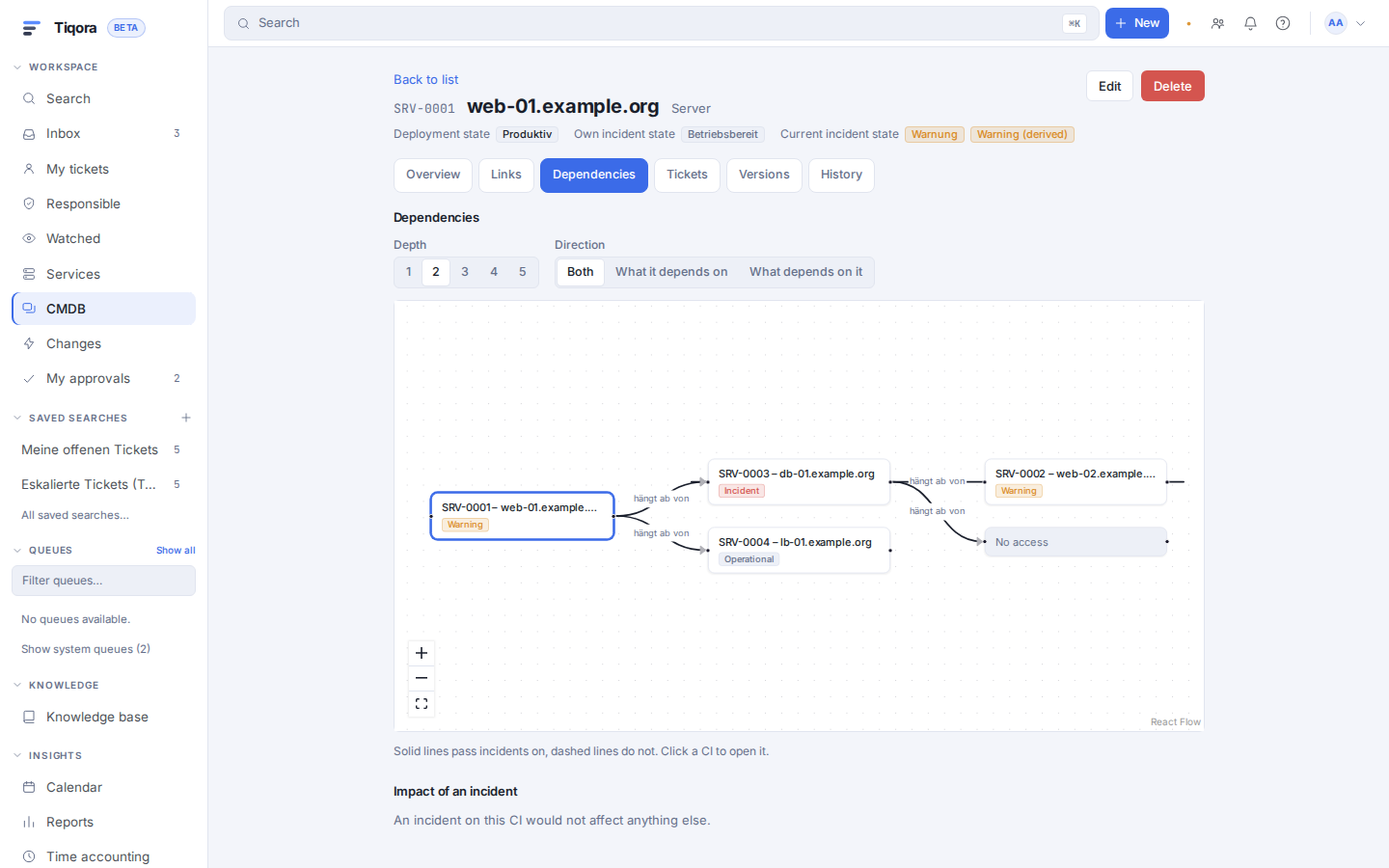
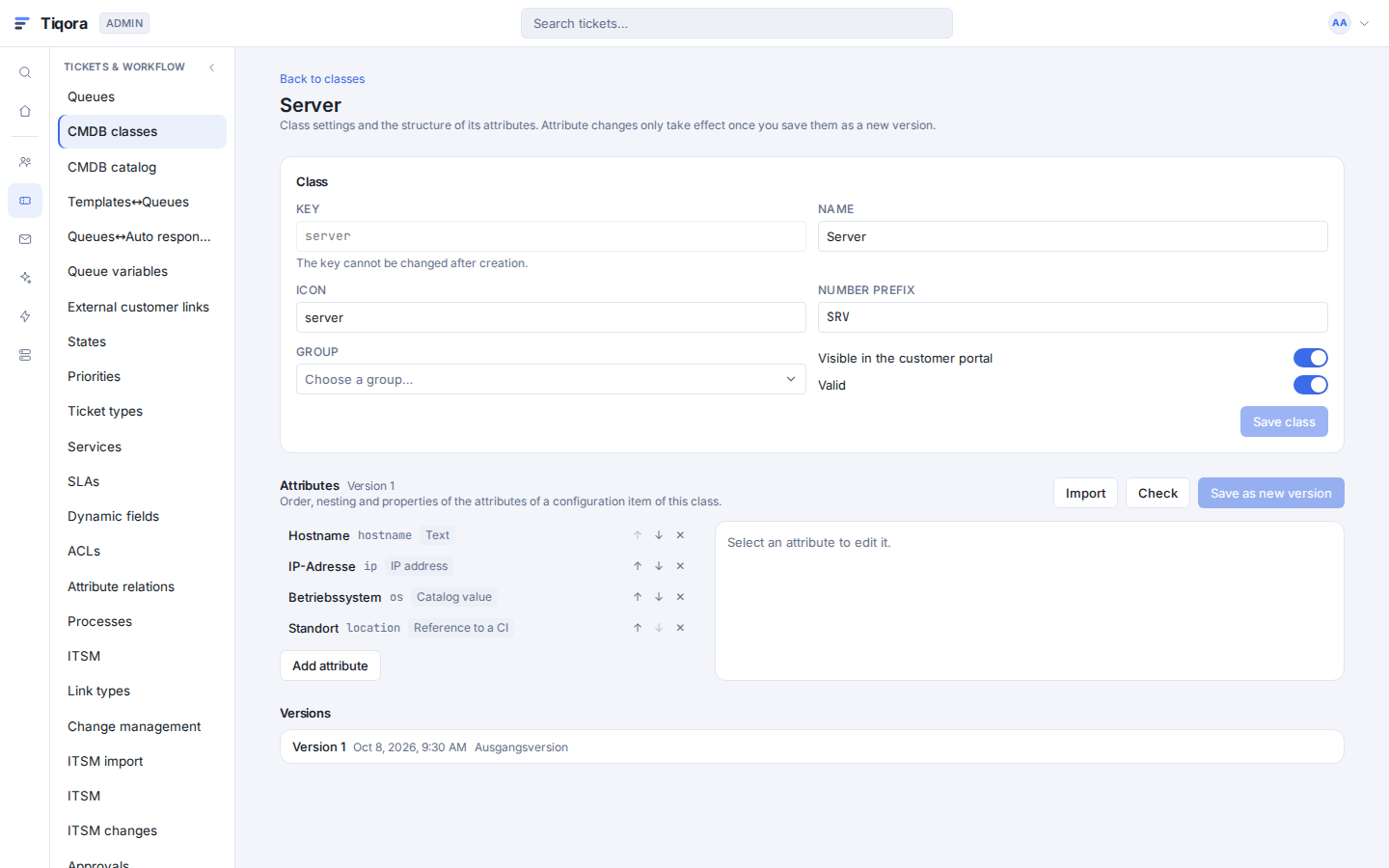
Incidents, problems, major incidents and a priority matrix. Read the CIs from Znuny ITSM 6.5/7.3 (“Znuny führt das ITSM”) or keep them in Tiqora's own CMDB (“Tiqora führt das ITSM”) with versioned classes and impact analysis. An importer moves them over, with a dry run and a way back. The ITSM mode can also be off. Screens ↓
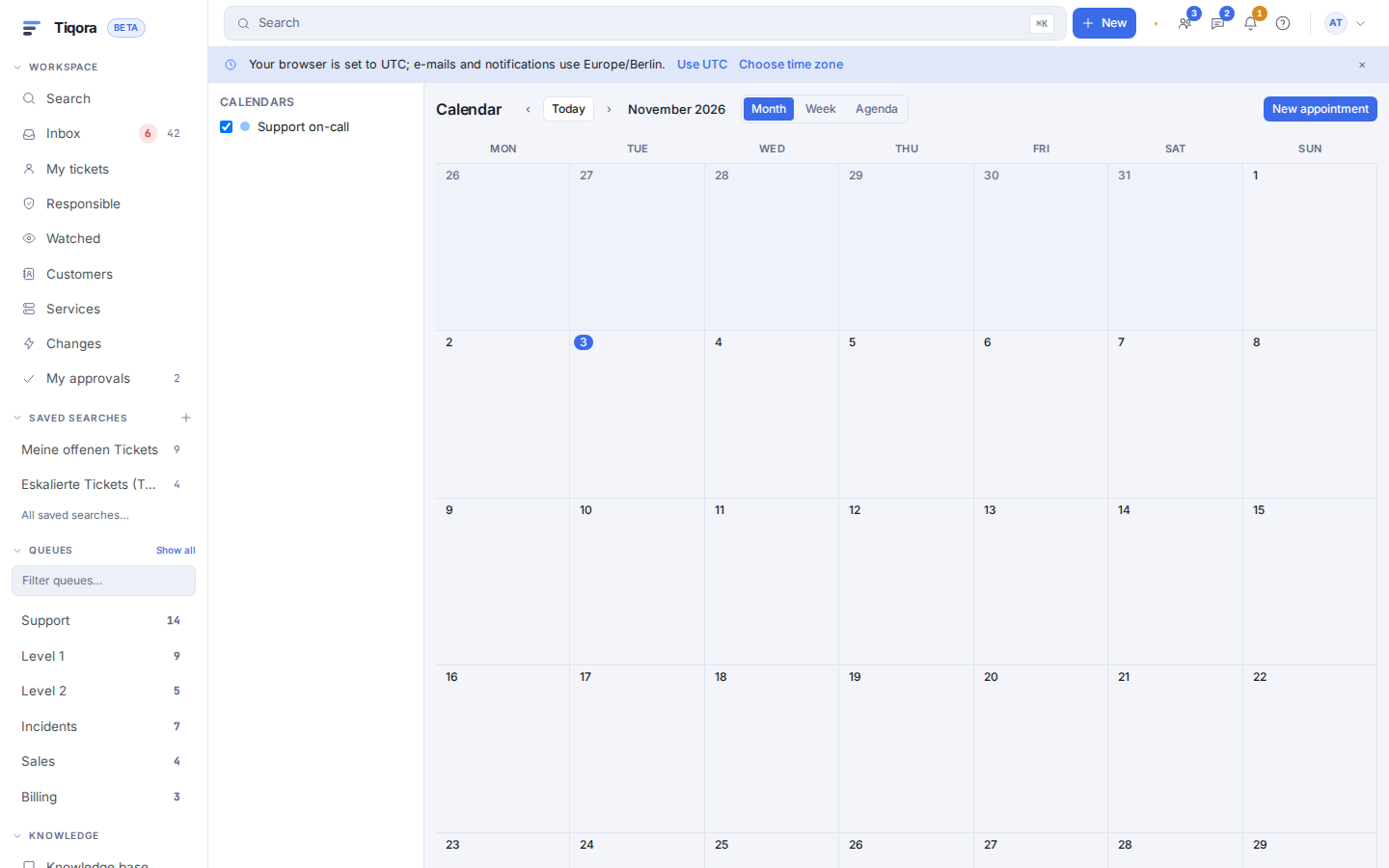
While Tiqora leads the ITSM: a change is a ticket plus a change record with type, phases, plans, time window, risk and impact. Tasks, templates and standard changes, a calendar with freeze windows and conflict checks, CAB meetings with agenda and minutes. Znuny's changes stay read-only, live or in an archive; Tiqora never writes them. Narrower than Znuny's: no change conditions or notification rules of its own. It has its own off-switch.
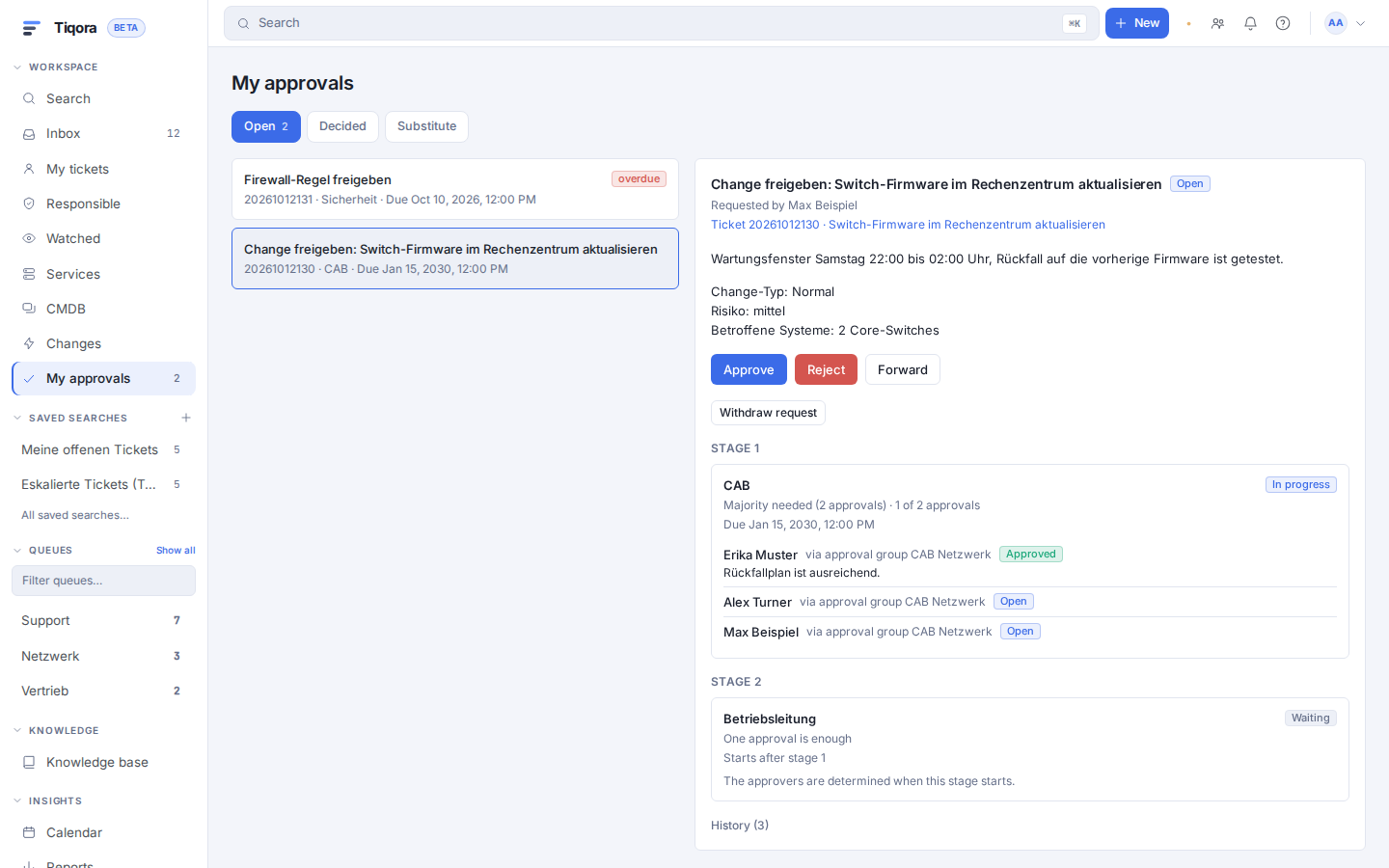
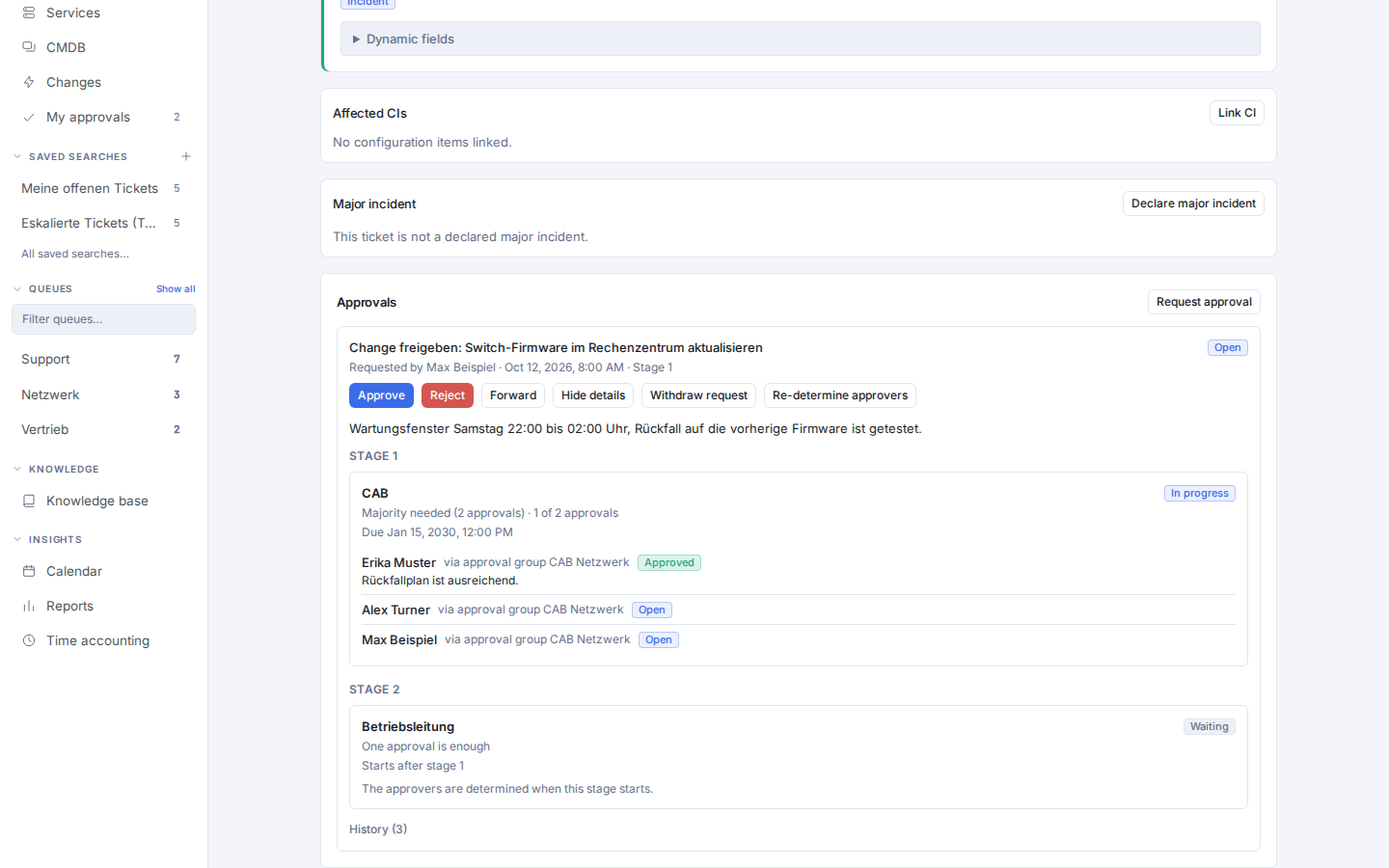
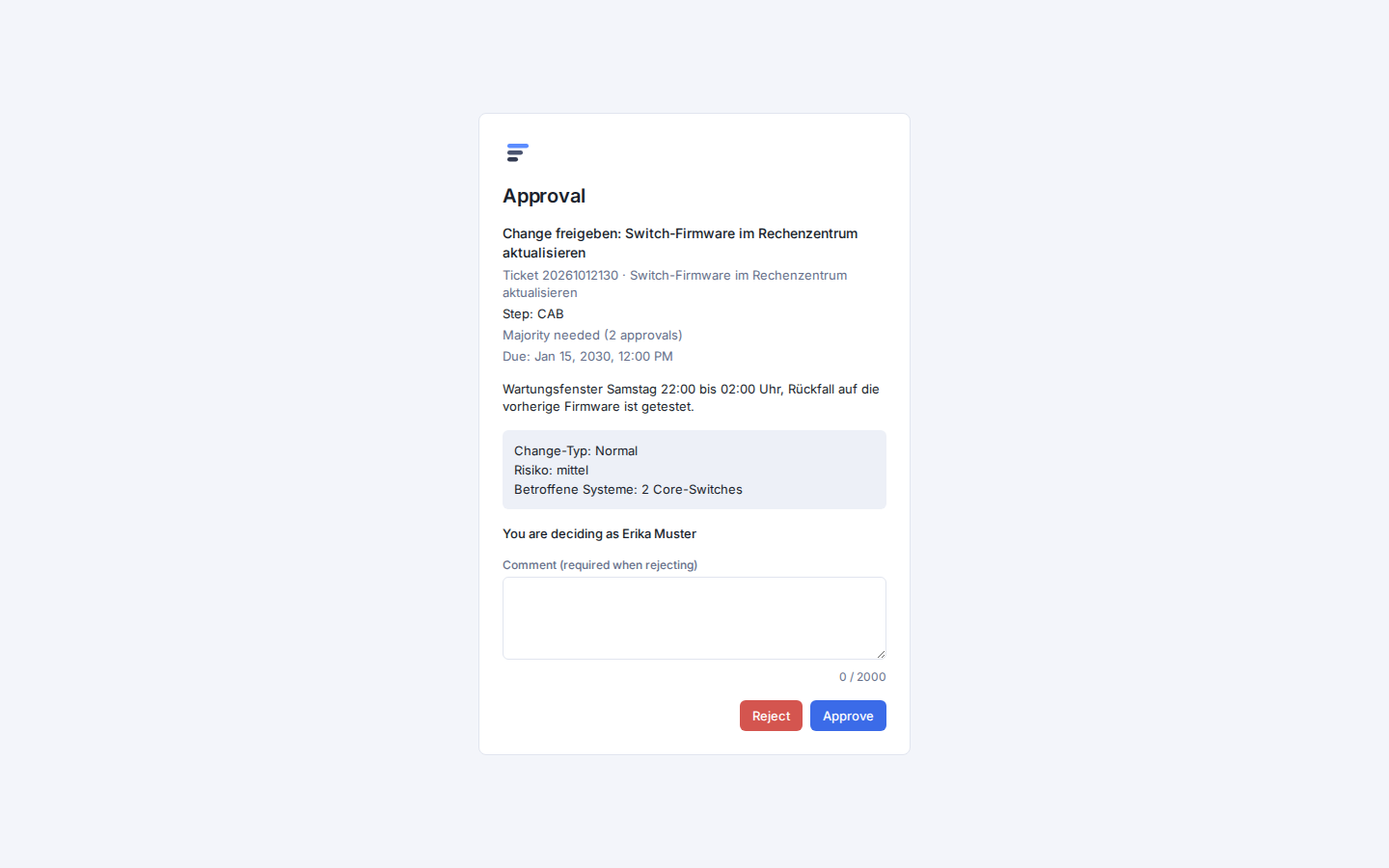
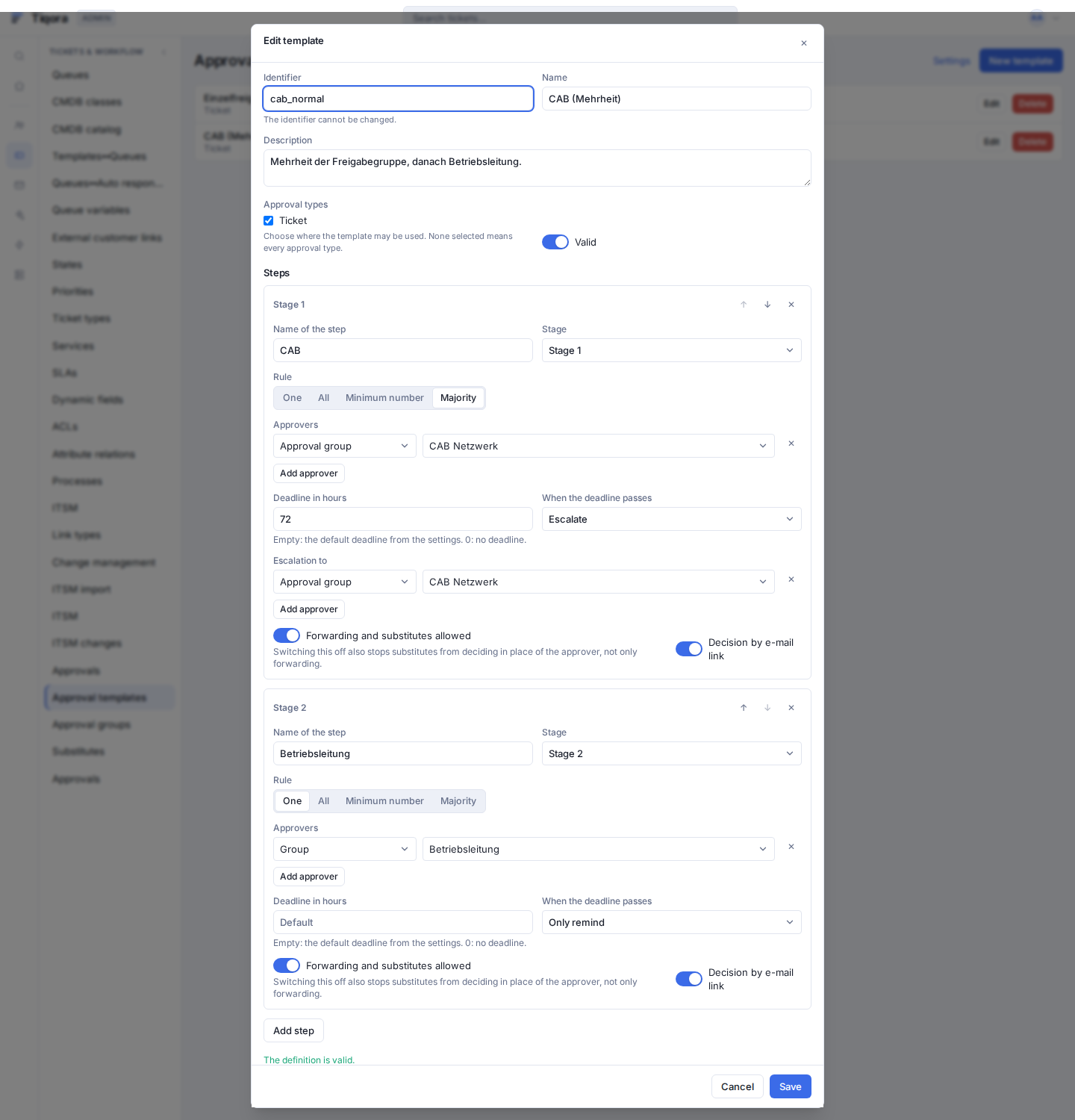
One engine for approval requests on a ticket: stages and parallel steps, rules (one, all, at least n, majority), deadlines with reminders and escalation, substitutes. People decide in their inbox, in the ticket, through a single-use e-mail link, in the portal if you allow customers, over REST or MCP. Not yet as a process step. An admin switch turns the module off and deletes nothing. Screens ↓
Runs Znuny processes from their deployed state, for agents and in the portal. A designer for steps, forms, transitions and actions, with validation, Znuny YAML import/export and versions; deploy from Tiqora while Znuny still runs via the TiqoraSync add-on.
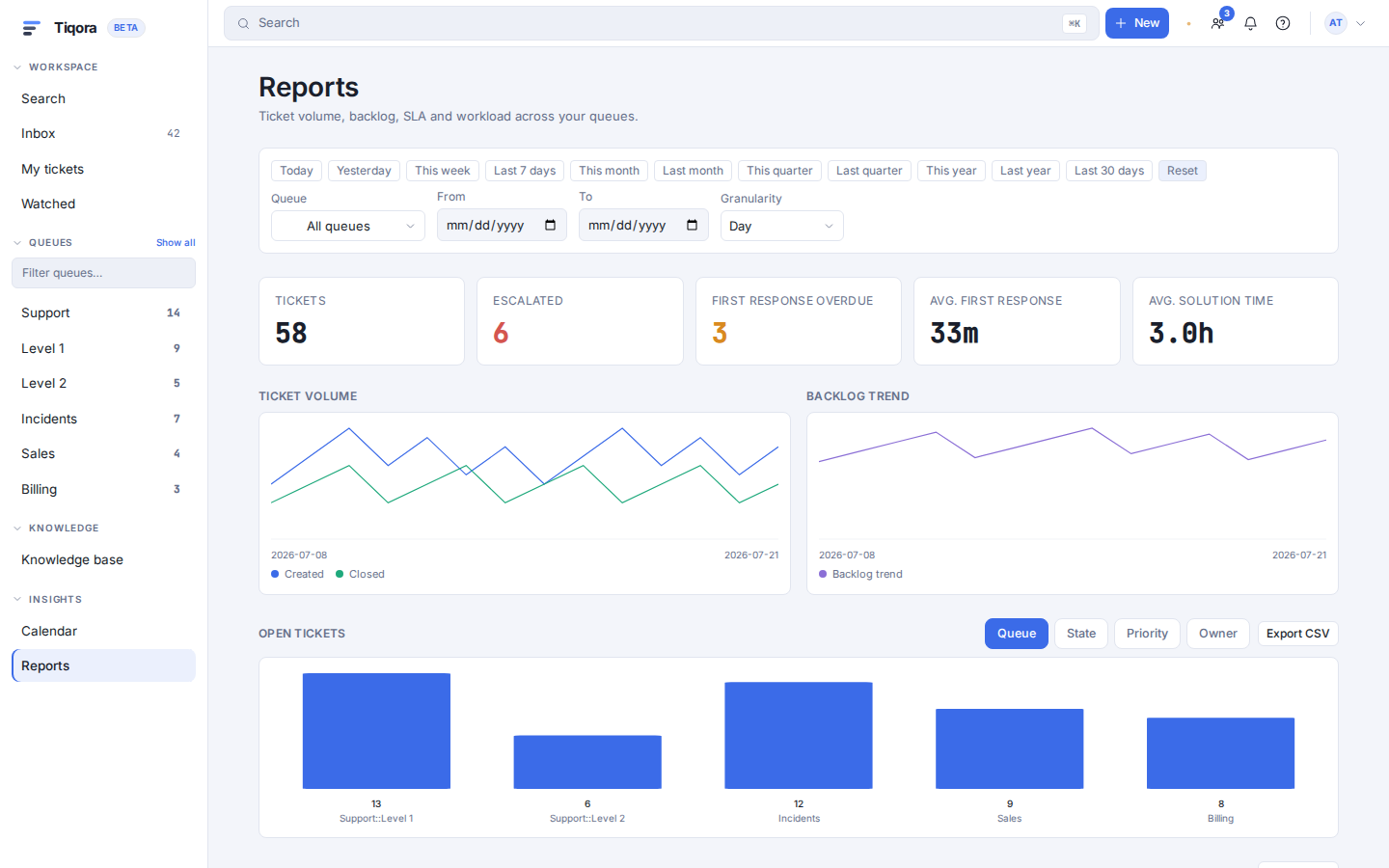
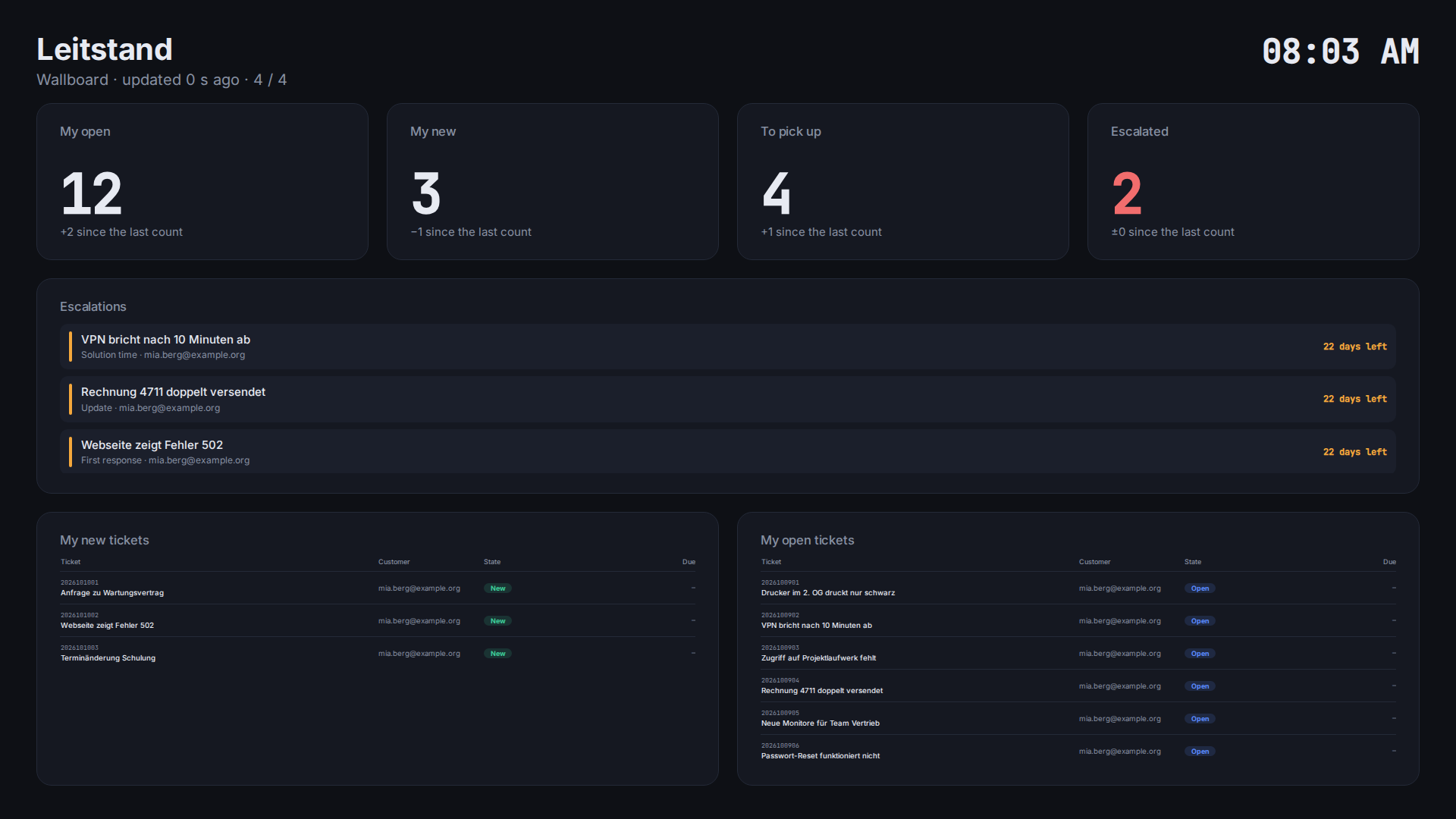
25 core and 16 ITSM built-in reports (the ones on CIs and changes need Tiqora to lead the ITSM), a report builder, saved reports and searches, import of Znuny statistics including the ITSM ones, PDF/XLSX/CSV export and scheduled delivery by e-mail. Widget dashboards per agent with role templates, report widgets, a TV mode and read-only wallboard links. Screens ↓
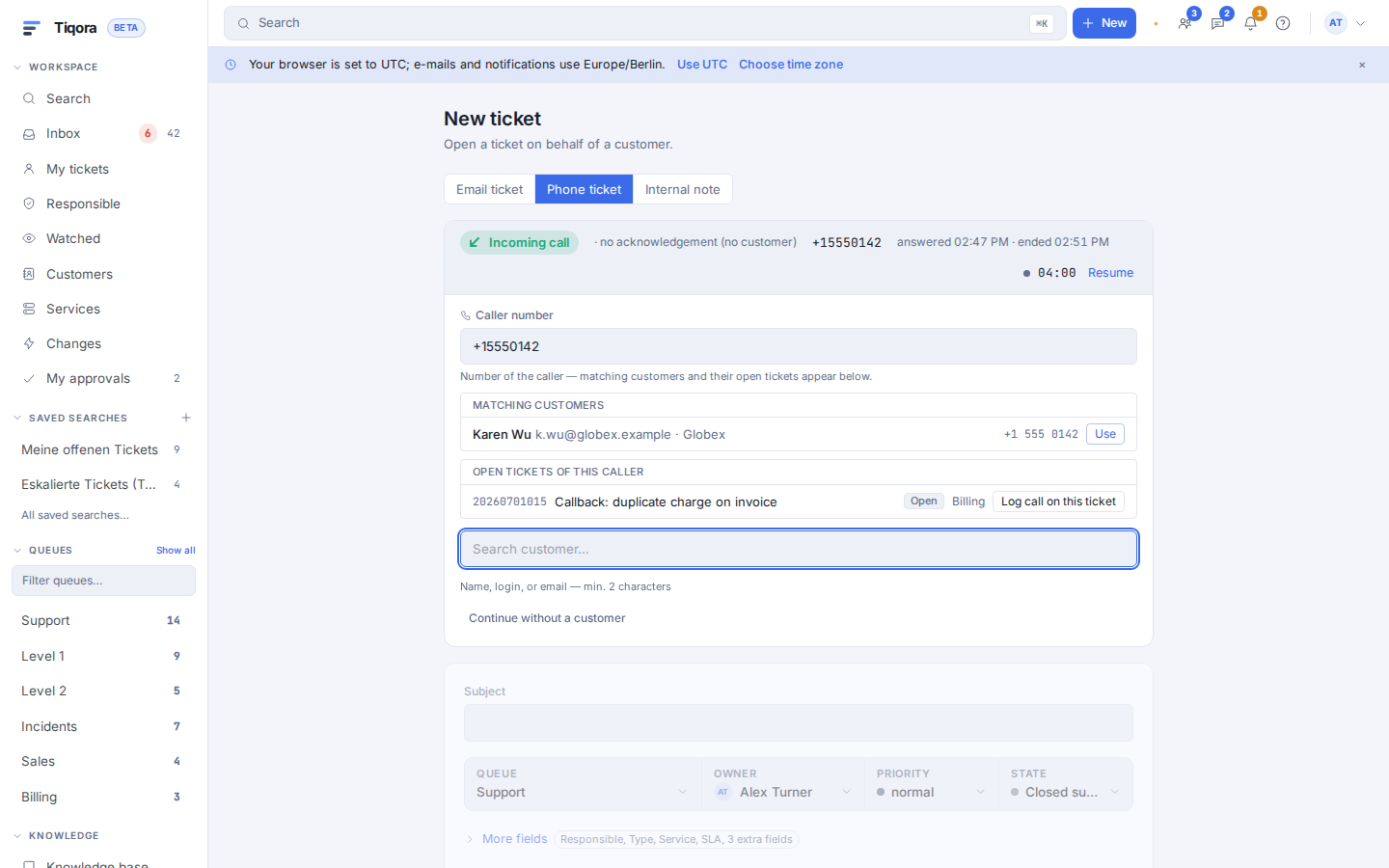
An embeddable web chat with opening hours, offline messages, uploads and recognised visitors; an AI assistant can answer first and hand over to the team. A real chat view for Telegram tickets; CTI call popups, caller lookup and compact phone tickets for the hotline. Screens ↓
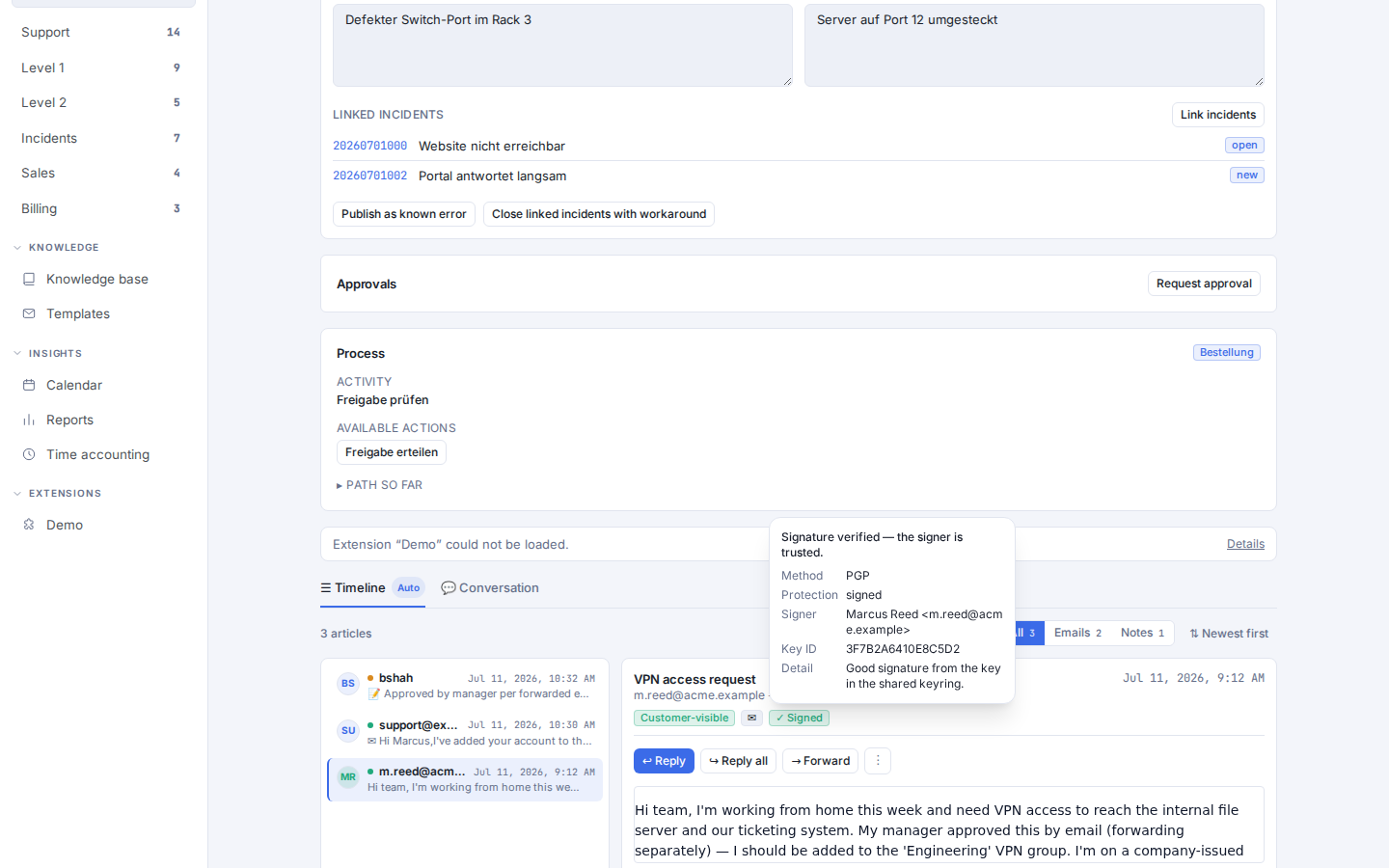
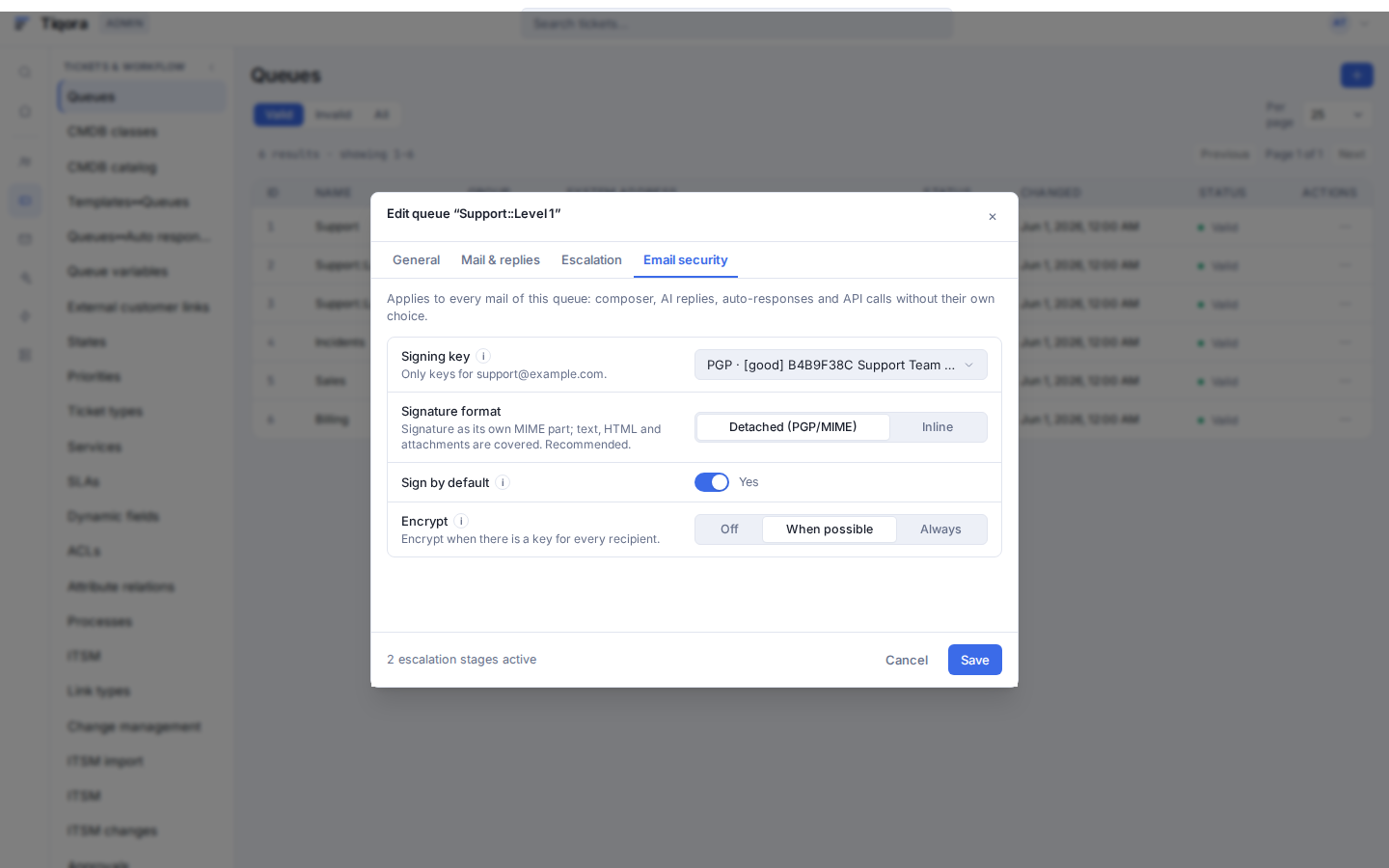
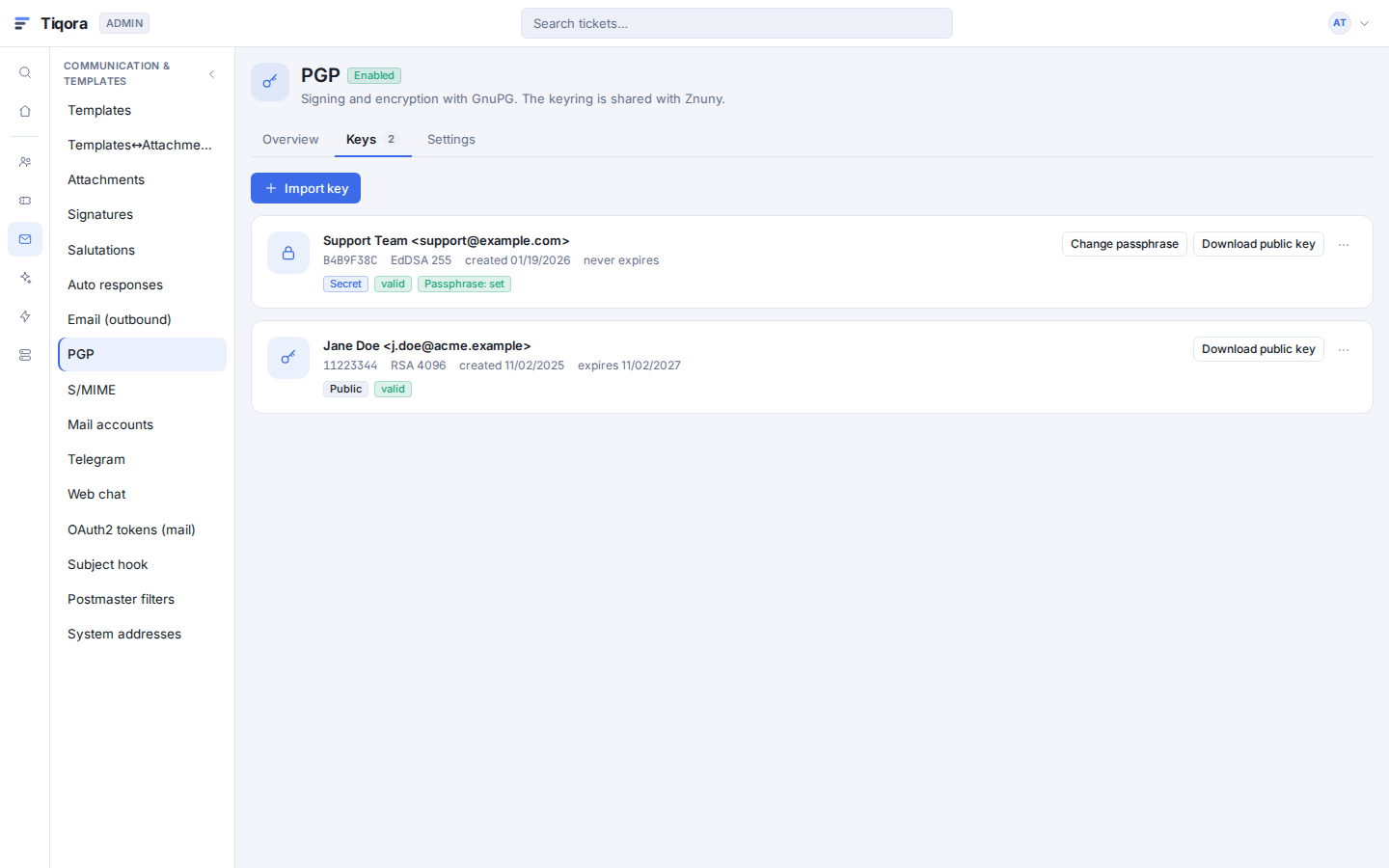
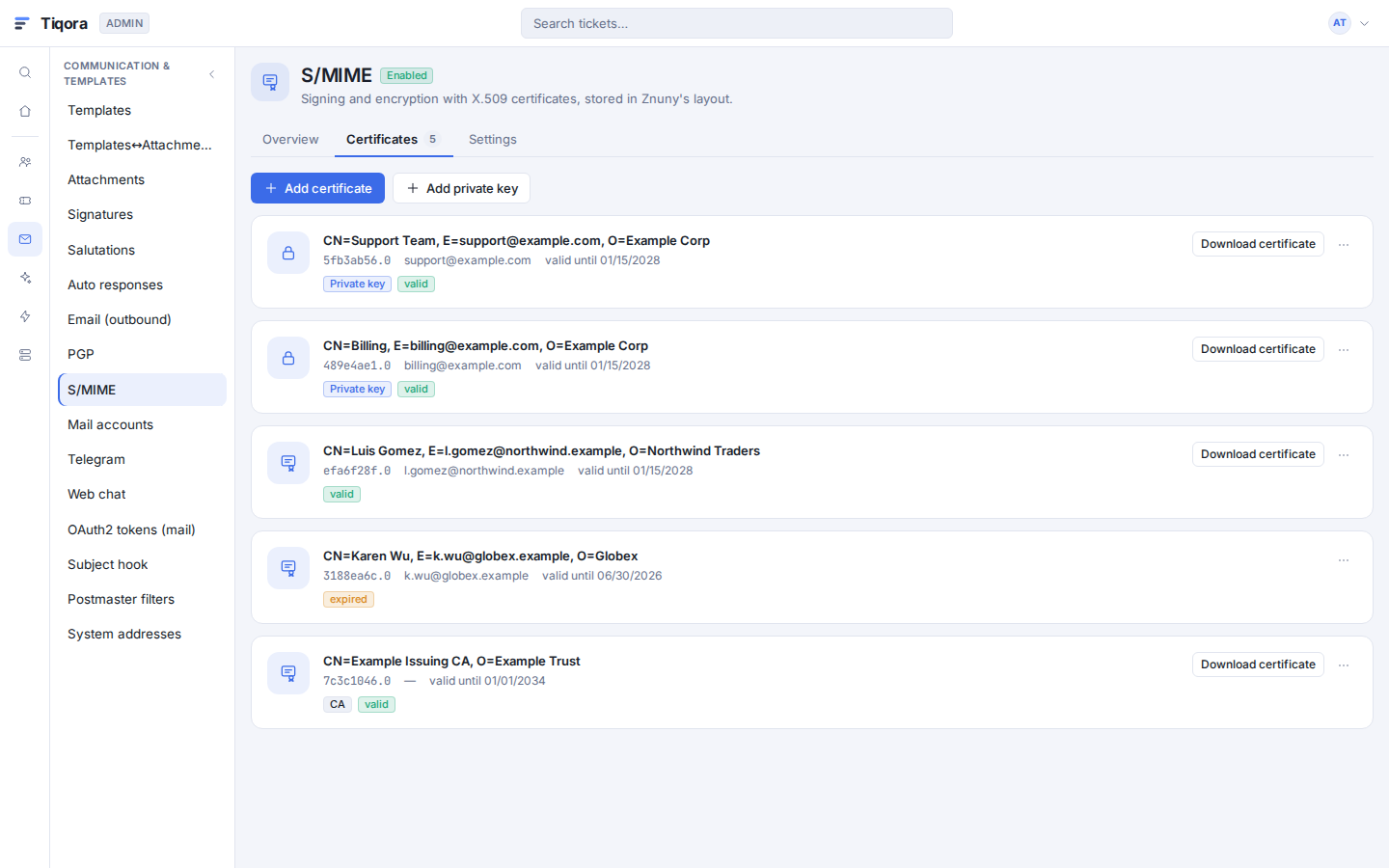
Verify and decrypt inbound mail, sign and encrypt replies, notifications and auto-responses — with per-queue defaults and the key stores shared with Znuny. Screens ↓
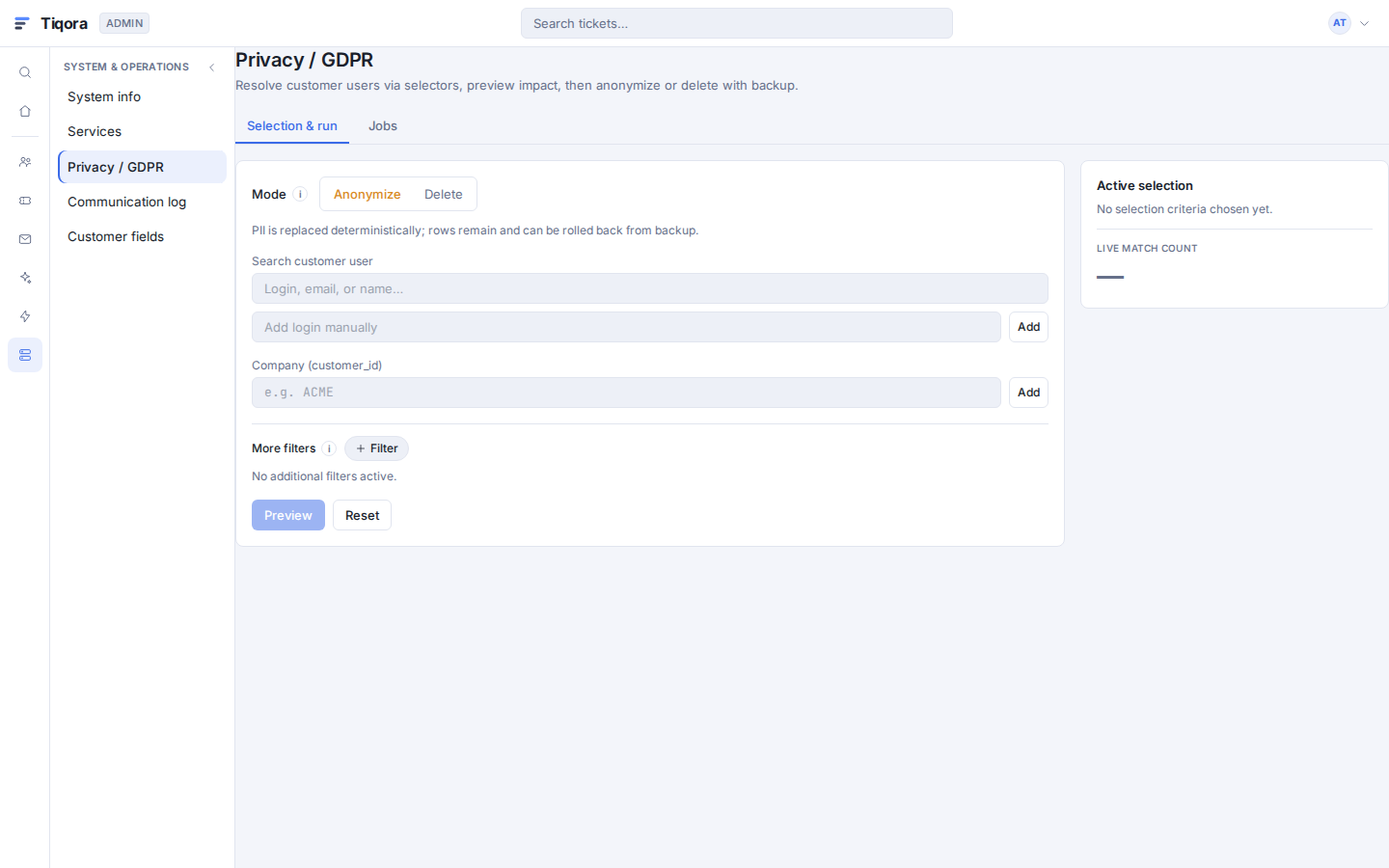
Customer anonymization, retention jobs, and audit trails — built into admin workflows.
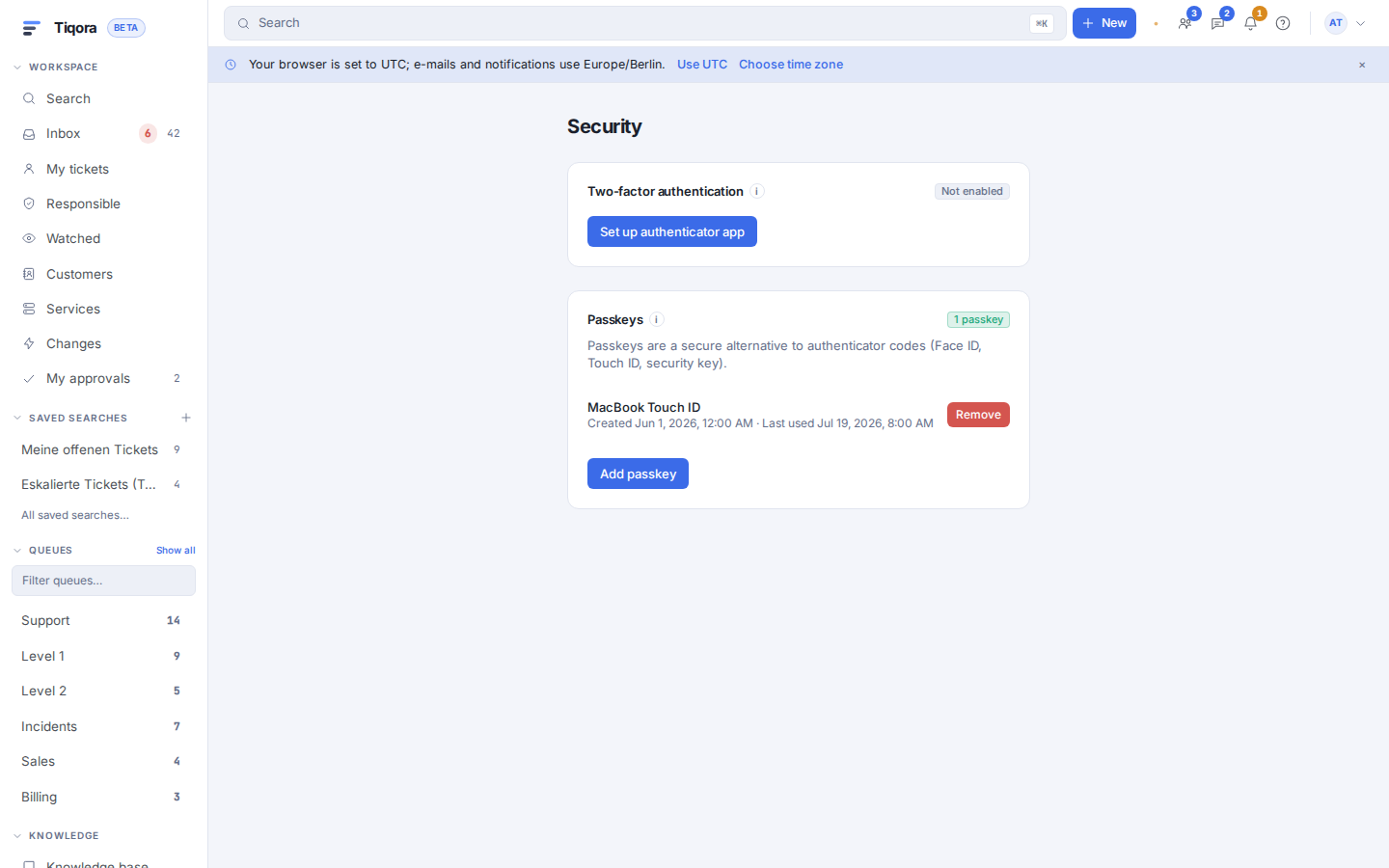
SAML 2.0 and OIDC for agents and customers with several identity providers, just-in-time accounts and role rules; SCIM 2.0 provisioning; step-up MFA and a session lifetime per provider. Also LDAP/AD, Kerberos/SPNEGO, legacy password hashes, TOTP and passkeys.
REST /api/v1 and webhooks. GenericInterface REST/SOAP
compatibility on both sides: the ticket and ConfigItem*
operations as a provider, ticket-event invokers with a debugger and
dry run as a requester. Channel plugins (email, Telegram, phone/CTI,
SMS, WhatsApp, web chat).
Python plugins with their own settings, routes, jobs, MCP tools, UI slots and database tables, plus extension points for hooks, process actions, channels, dynamic field types, report sources and more. Admins install signed packages (unsigned only when explicitly allowed) or add package repositories in the web UI.
Full Znuny language catalogue in the agent UI: all
48 Znuny .po locales plus English
source — RTL (Arabic, Persian, Hebrew) included. Preference
syncs with Znuny UserLanguage.
Python FastAPI backend, React frontend, Redis, Meilisearch. Clean-room code — not a Znuny fork.
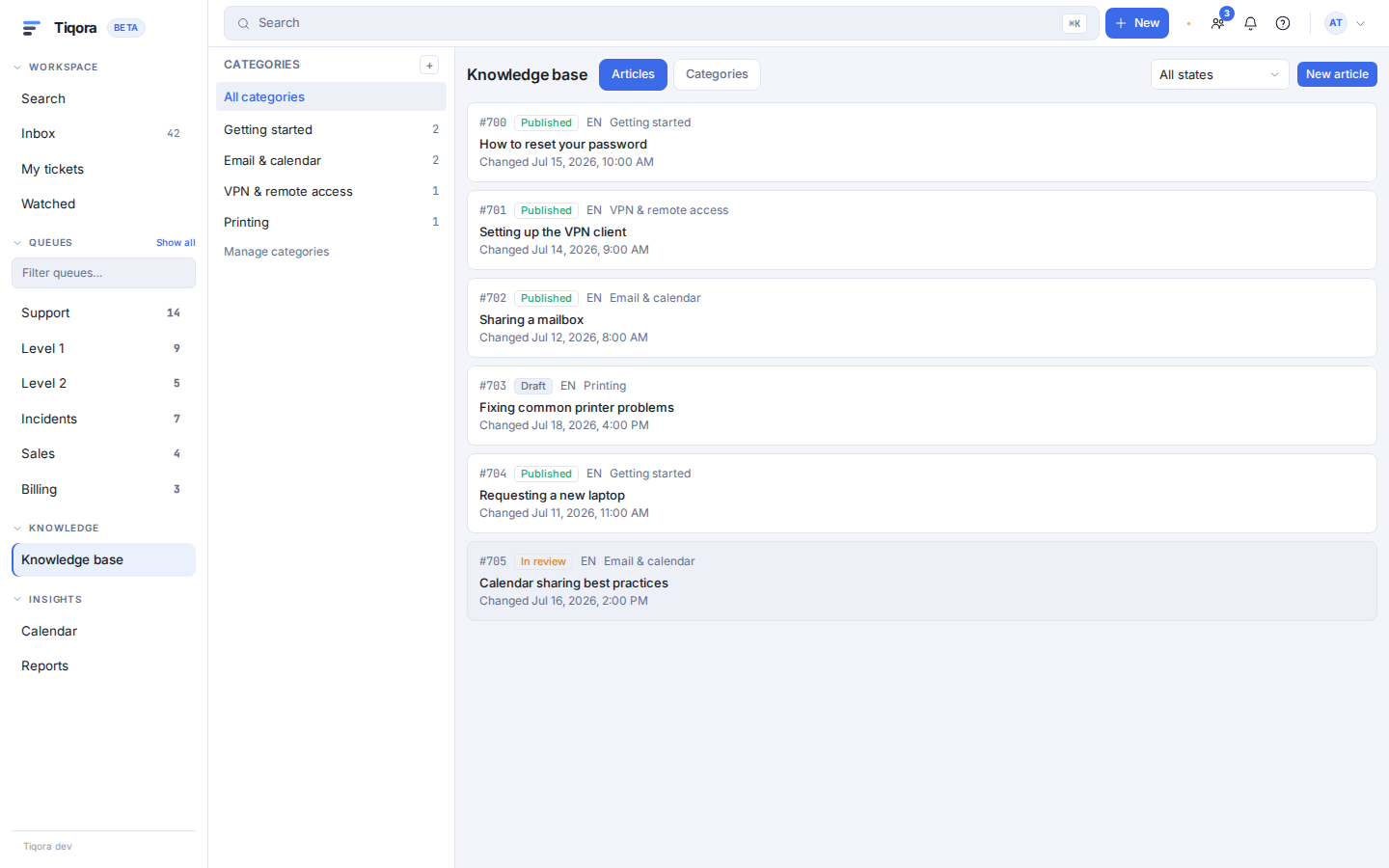
Optional self-service portal (opt-in) with tickets, process tickets, web chat and the customer's own systems from the CMDB, and a Markdown knowledge base with agent editing and portal search.
Supported peer databases for parallel operation. Preferred peers: Znuny 6.5 or 7.3. Full details in docs/support-matrix.md.
| Peer product | Profile | Parallel-op | Notes |
|---|---|---|---|
| OTRS 6.0.x / Znuny 6.0 | otrs-znuny-6.0 |
Yes | Table groups (hardest adapter) |
| Znuny 6.1 – 6.4 | znuny-6.1 … 6.4 |
Yes | Optional mail OAuth / tables per minor |
| Znuny 6.5 | znuny-6.5 |
Yes | Baseline · LTS, preferred peer |
| Znuny 7.0 – 7.3 | znuny-7.0 … 7.3 |
Yes | State/priority colour (7.0+); preferred 7.x: 7.3 (current release) |
Pick a topic, then click through its screens. Click the large image to view it full size; arrow keys step through the topic.
Greenfield, side-by-side with Znuny, or a controlled migration path.
Empty database, bootstrap with tiqora bootstrap, and run
Tiqora standalone.
Share one OTRS/Znuny 6.0–7.3 database. Additive
tiqora_* tables only — no peer schema changes until you
choose ownership.
Take over daemons feature-flag by feature-flag, then follow the cutover runbook when you are ready. How it works →
curl -fsSLO https://raw.githubusercontent.com/CygnusNetworks/tiqora/main/docker-compose.quickstart.yml
docker compose -f docker-compose.quickstart.yml up -d
Then open http://localhost:8000/ and sign in as
root@localhost / tiqora-demo. Comes with 40 demo
tickets; evaluation only (fixed passwords, plain HTTP).
Full agent, admin, and portal UI in your browser — mock data only, nothing is saved.